Best Greek Island Hopping Routes: A Vegan-Friendly Planning Guide
Updated 25 October 2026 · Practical Greek island route planning · Recheck ferry schedules, menus, weather and departure connections before booking
Short answer: For a vegan-friendly Greek island trip, choose two or three islands in one ferry group, keep one flexible day, and spend the final night near your departure port or airport. The easiest starting point for many first trips is a Cyclades route such as Athens/Rafina → Paros → Naxos, with Santorini or Milos added only when the dates show a sensible connection. Schedules, prices, menus and opening hours change, so verify them before paying.
Greek island hopping is less about collecting destinations and more about making each move workable. A vegan traveller needs the same ferry logic as any other traveller, plus a current food plan for every base, packed food for crossings and a backup when wind or a seasonal closure changes the day.
What you’ll find in this guide
Start with route styles, compare Cyclades chains, then check vegan food logistics, ferry and weather risks, and the seven-day template.
Best Greek island-hopping route styles
Start with your arrival airport or port, then draw a short chain rather than a zig-zag. Ferryhopper lets you compare operators, schedules, durations and fares for selected dates; Seajets publishes its own network and seasonal sailing information. Treat both as planning tools, not permanent promises.
| Route style | Good for | Vegan-planning watch-out |
|---|---|---|
| Two-island Cyclades | First trips and slower travel | Choose bases with groceries and several current menus |
| Three-island Cyclades | More variety in 8–10 days | Check that the middle leg runs on your dates |
| One island plus day trips | Families, remote-work stays and weather flexibility | Confirm local boats and return times |
| Ionian or Dodecanese loop | Travellers starting near Corfu, Rhodes or Kos | Do not mix island groups without checking a long repositioning leg |
Cyclades routes worth comparing
The Cyclades are the simplest place to begin researching because Athens-area ports feed several island chains. Rafina is useful for some northern Cyclades sailings; Piraeus is another major gateway. The exact island order depends on the dates, operator and whether you prefer a conventional ferry or a faster service.
1. Paros and Naxos: the balanced first trip
Compare Athens/Rafina → Paros → Naxos → Athens (or the reverse) for a route with town life, beaches, villages and practical grocery stops. Add a night near the departure port if the return sailing connects to a flight. A route can look short on a map and still be awkward if the only ferry is late or seasonal.
2. Milos and one neighbouring island: scenery without a race
Research Athens/Piraeus → Milos → a confirmed neighbouring island → Athens. Milos works well as a first base for travellers who want beaches and geology, but do not assume every onward pairing runs daily. Our Milos ferry guide explains what to check before booking.
3. Andros, Tinos and Mykonos: a northern Cyclades chain
When current sailings line up, Rafina → Andros → Tinos → Mykonos creates a north-to-south-feeling route without returning to Athens between each stop. Keep it to two islands if your trip is short. Check port transfers, late arrivals and food availability in smaller towns before committing.
4. Santorini as an add-on, not a default
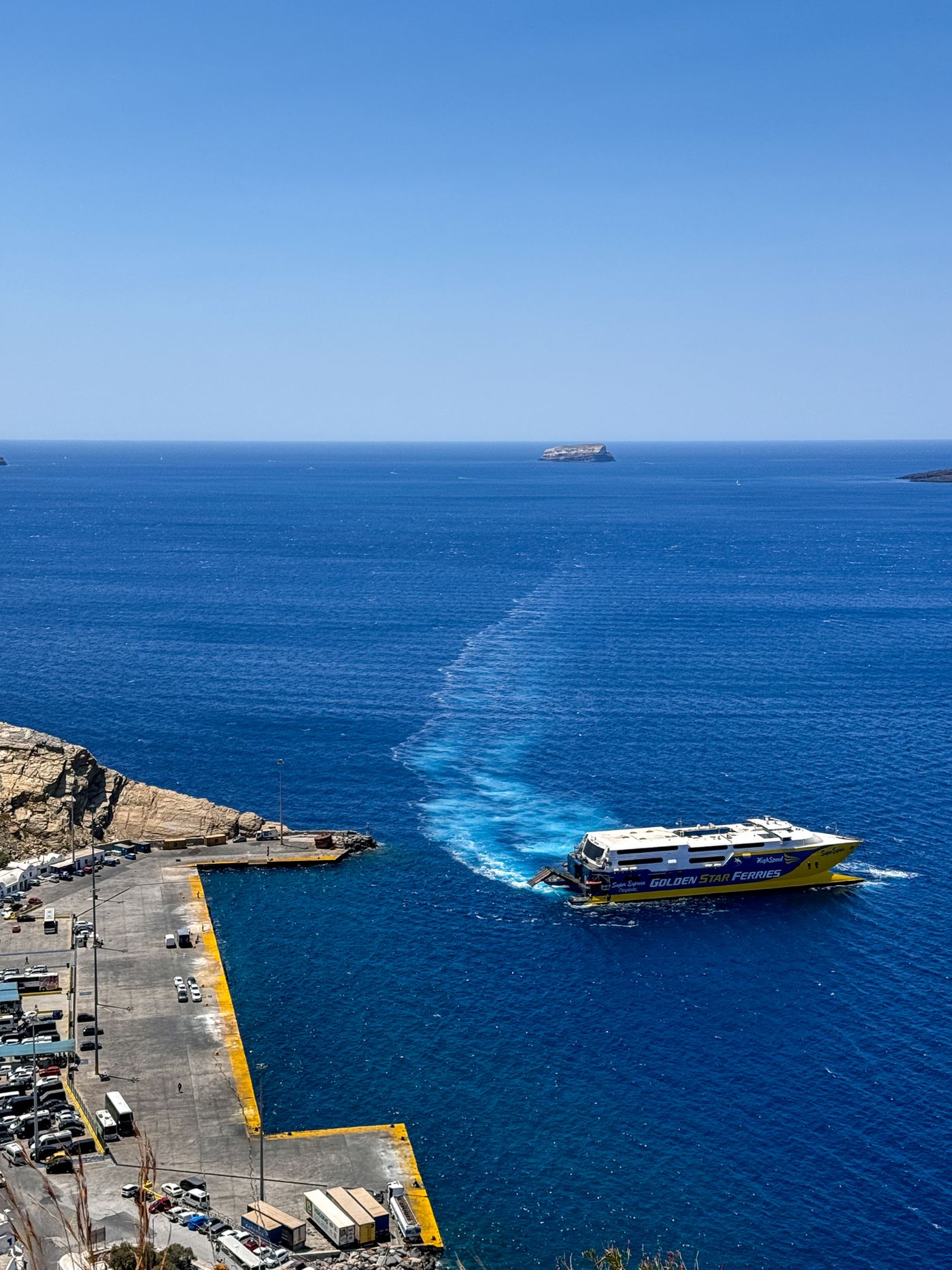
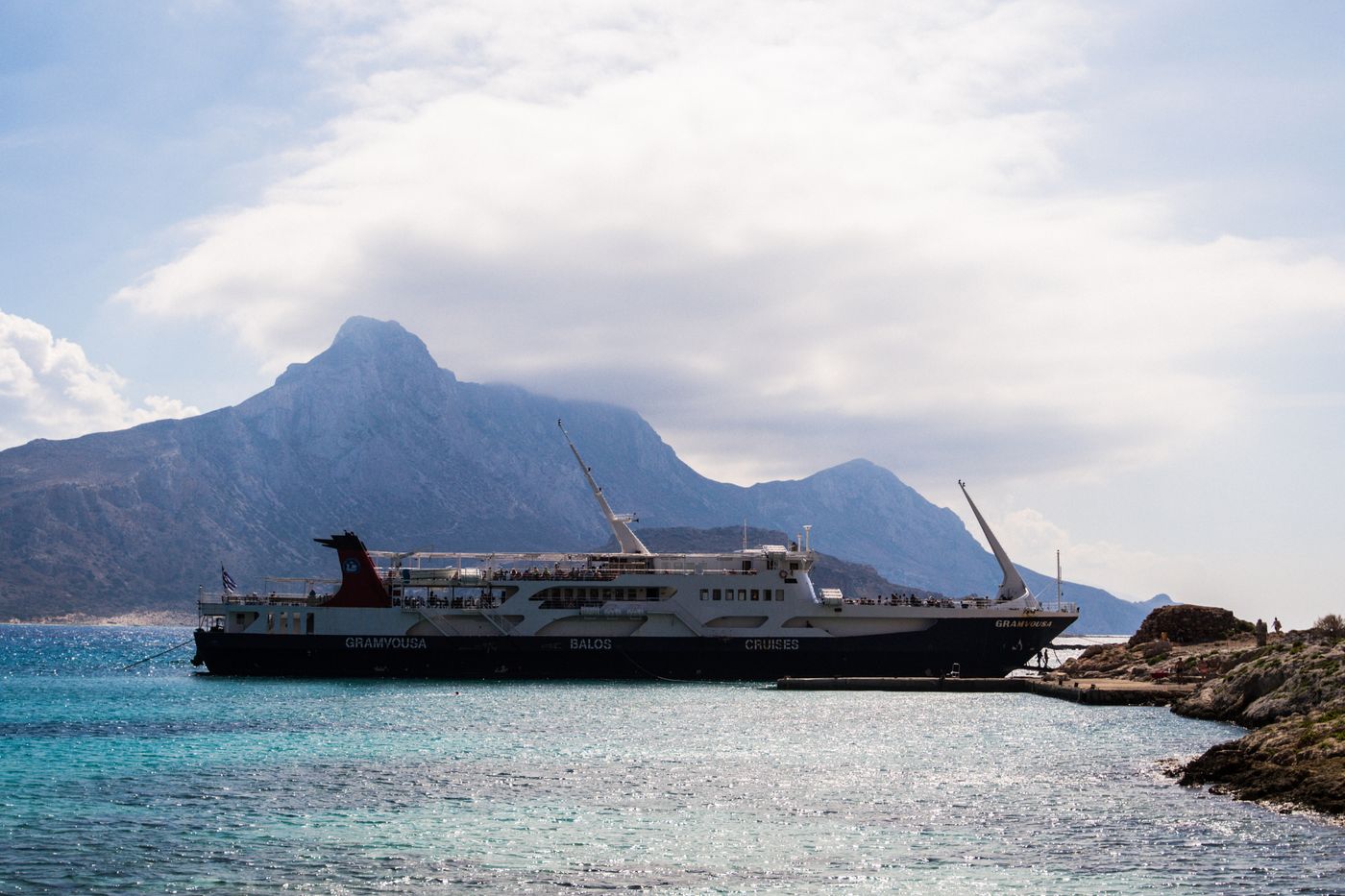
Santorini can fit a Cyclades itinerary, but its popularity and transfer times make it a poor reason to overpack the route. Use it as a two- or three-night add-on when the sailing works, and leave time for a calm departure. The image below shows a ferry leaving Fira harbour; it is a travel visual, not evidence of a current route.
5. Outside the Cyclades: choose one island group
Corfu and Paxos, or Rhodes and nearby Dodecanese islands, can be excellent trips, but they are separate planning problems from Athens-based Cyclades hopping. If you arrive elsewhere in Greece, compare local ferries first rather than forcing an inter-island jump across the Aegean.
How to plan vegan food on Greek islands
Greek cuisine includes many plant-based dishes, but a vegetable dish is not automatically vegan. Ask about feta, yoghurt, butter, egg, honey, fish, meat stock, sauces and shared grills. Use “vegan” clearly, then confirm the whole dish rather than relying on a menu heading.

| Before each island move | What to confirm |
|---|---|
| One reliable meal | Current menu, vegan preparation and opening day |
| One grocery option | Plant milk, bread, fruit, beans, nuts and ready-to-eat food |
| One packed meal | Breakfast or lunch for the crossing and arrival gap |
| One accommodation backup | Fridge, kitchen, late check-in and port transfer |
Do not label a restaurant “fully vegan” unless its current menu and business information support that. A mixed restaurant may be able to prepare a safe meal, but shared equipment and changing staff practices deserve a direct question. Message ahead in busy months and carry a translation note for ingredients.
Ferry, luggage and weather checks
Ferry schedules are seasonal and can change with weather, maintenance or demand. Check the operator and your booking platform close to departure. Confirm the port, boarding window, baggage rules, ticket format, vehicle requirements, cancellation terms and whether the sailing is conventional or high-speed.
- Leave a generous gap between a ferry arrival and a fixed tour, restaurant booking or flight.
- Keep tickets, accommodation details and operator contacts offline.
- Use a flexible day before an international departure whenever possible.
- Pack water, breakfast, snacks and a meal if the crossing is long or the onboard café is uncertain.
- For a remote beach, pack the return-day food too; a beach taverna may be closed or not vegan.
Choose a base with practical food access
Town bases and larger islands usually make groceries, pharmacies, transport and multiple food options easier. Smaller islands can be wonderful, but shoulder-season opening hours and delivery coverage may be limited. Ask your host what is open on your arrival day, whether a taxi or bus serves the port, and where the nearest supermarket is.
A flexible seven-day template
| Day | Plan | Vegan safeguard |
|---|---|---|
| 1 | Arrive and settle | Buy breakfast and snacks; confirm the next ferry |
| 2 | Explore island one | Use one verified meal and one grocery backup |
| 3 | Ferry to island two | Pack food and leave time for port transfers |
| 4 | Town, beach or village day | Check the return route before leaving town |
| 5 | Flexible weather day | Keep an indoor, grocery or self-catering option |
| 6 | Return toward departure | Sleep near the airport or final port if needed |
| 7 | Protected departure | Do not put an international flight behind a same-day ferry |
What to pack for island hopping
- Reusable water bottle, shelf-stable snacks and one ferry meal
- Offline tickets, maps, accommodation address and operator contact
- Short vegan ingredient note translated for your route
- Power bank, layers and sun protection
- A small grocery plan for the first morning on each island
Frequently asked questions
How many Greek islands should I visit?
For a first trip, two bases are often enough. Add a third only when the ferry, food, accommodation and departure route are all confirmed.
Is Greek food easy for vegans?
There are many naturally plant-based dishes, but dairy, egg, honey, fish and stock can appear in recipes or sauces. Ask directly and verify each venue.
Should I book a high-speed ferry?
Compare price, duration, luggage rules, sea conditions and the value of flexibility. A faster ticket is not automatically the safest connection.
Can I connect a ferry directly to my flight?
It is safer to protect the flight with a buffer night near the departure airport or port. Same-day connections can fail when weather or disembarkation runs late.
What is the best route for a vegan traveller?
The best route is the one with few avoidable transfers, current food evidence, a grocery backup and enough time to change plans. For many first trips, compare Paros and Naxos before adding more islands.
Sources and last checked date
Checked 25 October 2026. Ferryhopper’s current 2026 schedule page groups routes by island region and says to check live timetables and prices for the dates you intend to travel. Ferryhopper: Greek islands ferry schedules 2026.
Seajets publishes its current network, route announcements and island-hopping information; use the operator’s booking flow for the sailing you intend to take. Seajets 2026 route schedule.
Visit Greece provides general context on Greece’s island geography and the difference between island groups. Visit Greece: Islands.
For structure comparison, localized Valentin research reviewed Unusual Nomad, GreekIslandInfo, Postcards by Hannah, Mr & Mrs Smith, Travel Monkey, and The Greek Vibe. Their route-grouping and ferry-logistics patterns informed this guide without copying rankings or wording.
Food listings and menus change. This guide does not treat a directory listing or a stock image as proof that a venue is fully vegan, open, or safe for an allergy. Recheck every time-sensitive detail before travel.