
Vegan Travel Toiletries: Pack, Verify & Fly
Short answer: Pack the smallest familiar toiletries kit you can verify, use, and replace safely. Check the exact product formula for vegan status, check the brand’s animal-testing policy separately, then confirm current airport liquid rules, medication procedures, leak protection, climate needs, and local replacements. There is no universal “vegan toiletry” shortcut: product-level evidence matters.
Updated 26 October 2026. Recheck airline liquid rules, destination restrictions, product formulas, vegan claims, and cruelty-free policies before travelling.
What you’ll find in this guide
Choose the kit · Verify claims · Pack by function · Check ingredients · Handle liquids · Match the climate · Use the checklist
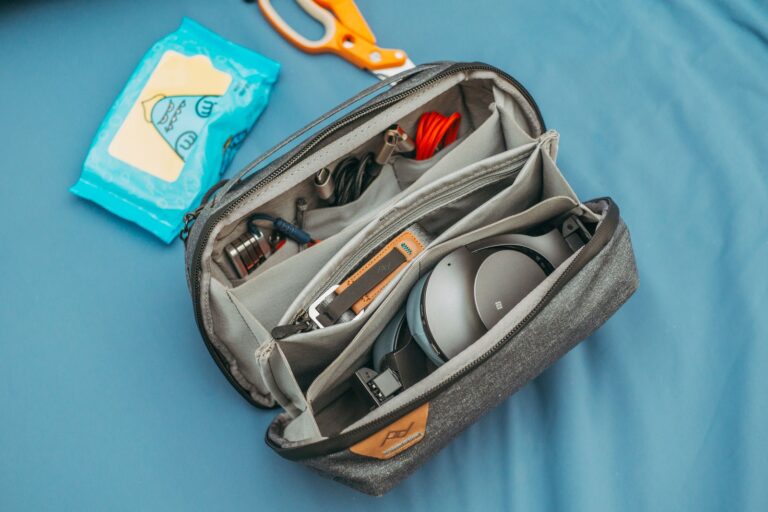
Featured image credit: Organized travel toiletry bag ready for packing. Photo: Timur Weber via Pexels.
What should you pack in a vegan travel-toiletries kit?
Pack the few personal-care products you genuinely use, then verify each exact formula as vegan and check the brand’s animal-testing policy separately. A practical kit usually includes dental care, body cleansing, hair care, deodorant, skin protection, sunscreen, shaving or menstrual products if needed, and medication. Use solid formats where they suit you, keep liquids in clearly labeled leak-resistant containers, and check the departure airport’s current security rules before every flight.
Vegan and cruelty-free are different checks. Vegan concerns animal-derived ingredients and processing; cruelty-free usually concerns animal testing. A product can pass one check and fail the other. “Natural,” “clean,” “plant-based,” and “eco-friendly” are not substitutes for product-level evidence.
Use this packing order:
- Health essentials first: medication, contact-lens supplies, and medically necessary products.
- Daily hygiene: toothbrush, toothpaste, cleanser, deodorant, shampoo, and the products you use every day.
- Destination protection: sunscreen, insect repellent, lip care, moisturizer, or cold-weather protection.
- Trip-specific items: shaving, menstrual care, laundry soap, after-sun care, or anti-chafing products.
- Optional products last: makeup, fragrance, styling products, and extras that can be left behind if space or verification is limited.
The best toiletry kit is not the longest list. It is a small, verified system that is easy to pack, use, replace, and explain if a product’s status is questioned.
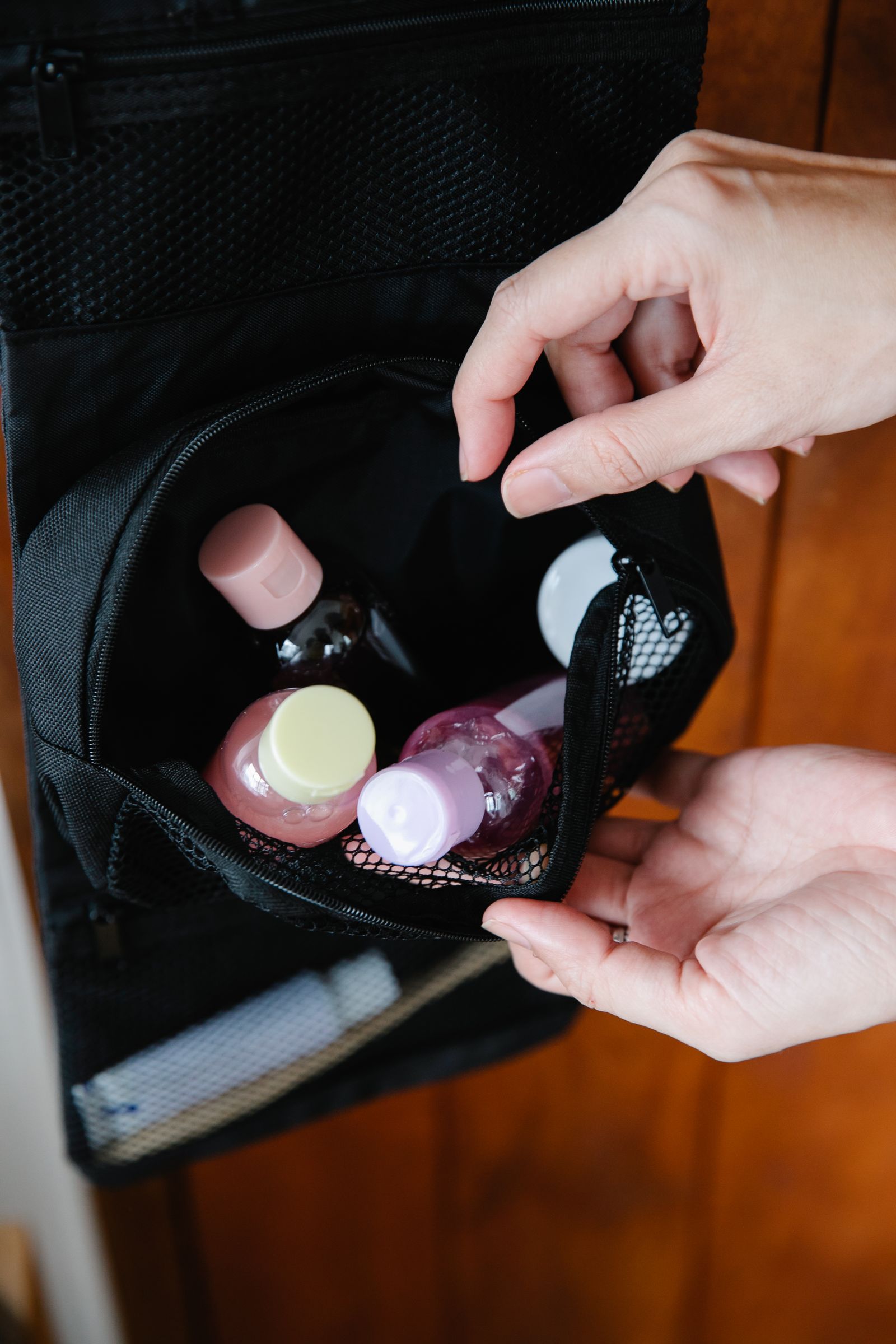
Image credit: Timur Weber via Pexels. Travel-sized toiletries organized in a pouch.
Vegan and cruelty-free: verify both claims
Before putting a product in your bag, answer four questions:
- Does the exact product contain animal-derived ingredients?
- Does the brand or manufacturer have a current animal-testing policy that fits your standard?
- Is the claim independently certified, and what does that certification actually cover?
- Could the formula, ownership, market, or packaging have changed since the evidence was published?
Certification programs have different scopes. A vegan certification may address ingredients and animal testing for products accepted into its scheme. A cruelty-free program may focus on animal-testing controls across a company or supply chain without proving that every product is vegan. A retailer category or old blog list may simplify the distinction too much.
Use a verification ladder:
If evidence is unclear, mark the item unverified. You do not need to solve every ambiguous ingredient while standing at the airport.
Build the kit around functions
Dental care
Pack a toothbrush, toothpaste, floss, and any interdental or retainer-care product you use. Toothpaste may be treated as a liquid or gel for air-travel screening, depending on the applicable rules, so check the current airport guidance. Toothpaste tablets can reduce liquid volume but still need ingredient and usage checks. Do not assume a tablet is vegan because it is dry.
Soap, body wash, shampoo, and conditioner
Bars can reduce liquid-bag pressure, while small bottles may be easier to use and verify. Check shampoo and soap bars for honey, beeswax, milk derivatives, silk, keratin, lanolin, tallow, and source-dependent ingredients. Pack bars in a container that allows them to dry between uses; damp bars can soften, leak, and contaminate the rest of the kit.
Deodorant
Choose a format you already tolerate: stick, cream, roll-on, spray, or refillable option. Check beeswax, lanolin, animal-derived fragrance components, and the current brand policy. Aerosols and liquids can have additional transport requirements, so a solid or stick may be simpler, but it is not automatically vegan or exempt from every rule.
Moisturizer and lip care
Check beeswax, lanolin, honey, collagen, carmine, and source-dependent glycerin or stearic acid. A small familiar product is safer than starting an elaborate new skincare routine right before departure. For a cold or dry destination, prioritize the products you already know protect your skin rather than packing several experimental treatments.
Sunscreen
Sunscreen is a health-protection product, not an optional “clean beauty” decision. Choose the formulation that suits your skin and destination, then verify vegan status, animal-testing policy, expiration or use guidance, and container rules. Mineral is not automatically vegan, and reef-safe or natural language does not answer the animal-derived ingredient question. Follow the relevant public-health and product directions.
Shaving and hair removal
Check shaving soap, cream, aftershave, brush bristles, and accessories separately. Badger, boar, horse, and other animal hair can appear in brushes. A synthetic brush may address the bristle concern, but the adhesive, handle, case, and formula still need consideration.
Menstrual care
Pack the product you already use and know how to manage. Check materials, coatings, applicators, adhesives, and any animal-derived components where relevant. Carry enough for delays and identify a destination replacement option. Do not switch to an unfamiliar product in the middle of a difficult travel day just to reduce weight.
Medication and medical products
Medication and medically necessary products come before a cosmetic definition of veganism. Keep medicines in original packaging and follow the rules for your route. If an ingredient or capsule shell concerns you, ask a pharmacist or clinician about safe alternatives. Do not stop, substitute, or ration medication without professional advice.

Image credit: Pexels. Travel-size bottles and personal-care items organized in a toiletry pouch.
Ingredients that need extra verification
Ingredient names follow labeling conventions, but an ingredient list is not a complete vegan-certification system. Some ingredients have predictable animal sources; others can be plant-derived, synthetic, fermentation-derived, or animal-derived depending on the supplier and process.
Commonly animal-derived ingredients
- Beeswax, cera alba, or cera flava: common in lip balms, salves, and solid products.
- Honey or mel: used in some hair and skin products.
- Lanolin: wool-derived emollient found in some balms and creams.
- Carmine, cochineal, or CI 75470: insect-derived red pigment.
- Shellac: insect-derived resin used in some coatings and cosmetics.
- Keratin, collagen, elastin, and silk: commonly animal-derived unless a verified non-animal source is specified.
- Milk proteins, casein, whey, yogurt, or lactose: dairy-derived ingredients that can appear in skincare or haircare.
- Tallow, sodium tallowate, and gelatin: animal-derived materials used in some soaps, capsules, or personal-care products.
Source-dependent ingredients
Glycerin, stearic acid, stearates, squalene, hyaluronic acid, lecithin, fatty acids, fatty alcohols, lactic acid, vitamin D, some amino acids, fragrance components, colorants, and processing aids may require a manufacturer confirmation. Do not label every product containing glycerin as non-vegan, and do not label it vegan without evidence. Save the current product page or written response with the date you checked it.
Fragrance and flavor
“Fragrance,” “parfum,” and flavor declarations can represent mixtures that are not fully detailed on a retail label. A brand may be able to confirm that the complete formula meets its vegan policy. Toothpaste and lip products deserve the same attention as skincare.
Carry-on liquid rules without the confusion
Security rules vary by country, airport, terminal, container, and date. For departures from the United States, TSA’s liquids guidance generally uses a 3-1-1 framework for carry-on liquids, gels, aerosols, creams, and pastes, but you should check the current rule directly before departure. Other airports may use different bag sizes, screening technology, or implementation dates.
Practical packing choices:
- Keep ordinary liquid, gel, cream, paste, and aerosol products together in the required transparent bag when the airport requires one.
- Use containers that comply with the current limit rather than assuming a half-full large bottle is acceptable.
- Keep medically necessary products separate and follow the airport’s medical-exception procedure.
- Use solid bars or sticks only when they genuinely work for you; do not choose a solid solely because a blog says it is exempt.
- Keep labels visible when a product’s ingredients, medication status, or purpose may need explanation.
- Pack liquids in a leak-resistant pouch even inside the security bag.
Checked baggage can make larger containers easier, but it does not remove leak, heat, customs, or formula-verification concerns. A toiletry that is legal to carry can still be a poor packing choice if it spills across clothing.
Decanting, refilling, and hotel replacements
Decant only products you already use and can identify confidently. Record the product name and contents on the container, keep the original label or a photo, and test the cap for leaks before packing. Do not decant medication, sunscreen, or a product whose expiration, ingredients, or legal labeling you need to track unless the manufacturer’s or pharmacist’s guidance supports it.
Hotel toiletries are an emergency backup, not automatic proof of vegan status. Check the brand, product name, dispenser label, and current information where available. Refill dispensers can make the exact formula difficult to identify. If vegan verification matters, use your own product or buy a verified replacement locally.
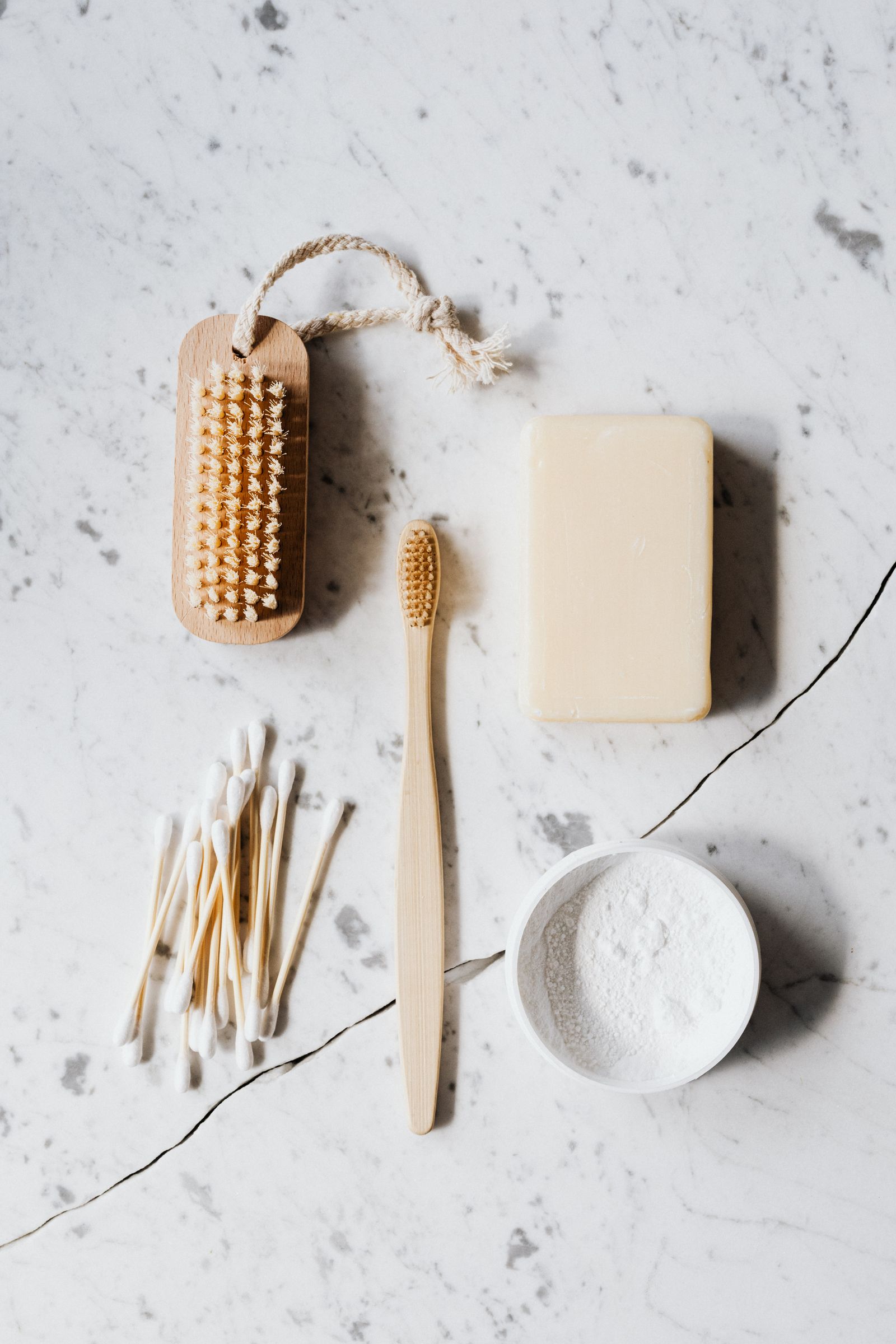
Image credit: Karola G via Pexels. Personal-care products arranged as a compact travel kit.
Pack by climate and trip style
Hot and humid trips
Protect bars from humidity, keep caps closed, and use a waterproof pouch. Heat can soften balms, deodorants, and solid products. Bring the minimum needed because some products are difficult to stabilize in warm luggage.
Cold or windy trips
Prioritize moisturizer, lip care, sunscreen, and any products you already know prevent cracking or irritation. Keep liquids from freezing if the package warns against it. A small amount of a reliable product is more useful than a large untested routine.
Backpacking and multi-stop travel
Choose products that can survive repeated packing, drying, and resupply gaps. Keep one small first-night pouch accessible and a replace-locally list for ordinary soap, shampoo, and toothpaste. Do not carry every possible product if a destination shop can provide a verified replacement.
Long trips
Record product names, ingredients, certification links, and replacement options. Formulas and ownership can change, so recheck important products before departure rather than relying on a saved screenshot from years ago.
Vegan toiletries packing checklist
- Toothbrush, toothpaste, and floss
- Soap or body cleanser
- Shampoo and conditioner if needed
- Deodorant
- Moisturizer and lip care
- Sunscreen appropriate to the destination
- Shaving supplies and synthetic applicators if required
- Menstrual products if required
- Insect repellent or after-sun care where useful
- Medication and medical supplies in original packaging
- One transparent liquid bag if required by the departure airport
- One leak-resistant pouch and labels for decanted items
- A short list of products that can be replaced locally
How to ask a toiletries brand
When the label is not enough, ask a specific question instead of sending a general “Is this vegan?” message. Include the exact product name, shade or scent, size, barcode or SKU, and country where you will buy it. Ask whether the complete current formula contains animal-derived ingredients, whether processing aids or fragrance components are covered, and whether the answer applies to that exact variant. Ask separately about the company’s animal-testing policy and the date of the information.
Save the reply with the product page and access date. A customer-service answer that only says “our products are cruelty-free” may not answer the vegan ingredient question. Likewise, “plant-based ingredients” may not cover every component, adhesive, applicator, or processing aid. If the response is vague, choose a certified or better-documented alternative.
Reduce waste without making unsupported claims
Travel-size packaging can create more containers per use, while decanting can reduce volume but adds cleaning, labeling, and leak risk. Solid products may last longer for some travelers but can soften in humidity or become unusable if they cannot dry. Refill systems can be helpful when the supplier clearly identifies the formula and the container can be cleaned properly.
Use what you already own before buying a new “travel” product, and leave room for responsible disposal or recycling at the destination. Do not call a product zero-waste, plastic-free, biodegradable, reef-safe, or sustainable unless the claim is supported by current product and packaging evidence. The most useful low-waste choice is often the smallest verified amount that you will actually finish.
Travel-day packing sequence
Pack medication and essential health products first. Put the liquid bag where it can be removed quickly, keep solid bars dry, and place leak-prone containers inside a second pouch. Photograph important labels before leaving, especially when a product’s vegan status depends on a certification or source confirmation. Keep a short replace-locally list for ordinary soap, toothpaste, deodorant, and shampoo so a delayed bag does not become a crisis.
At the destination, check caps and seals before placing toiletries near clothing. Let bars dry, keep shared bathroom products closed, and recheck any replacement product before using it. This simple sequence protects the trip without requiring a large or complicated kit.
Frequently Asked Questions
Does cruelty-free mean vegan?
No. Cruelty-free usually addresses animal testing, while vegan addresses animal-derived ingredients and processing. Check both claims separately.
Does vegan mean cruelty-free?
Not automatically. A product may contain no animal-derived ingredients while the brand’s animal-testing policy does not meet your standard. Check the relevant certification or current company policy.
Are shampoo bars always vegan?
No. A shampoo bar can contain honey, beeswax, milk, silk, keratin, lanolin, or source-dependent ingredients. Read the current product information.
Is glycerin vegan?
It can be plant-derived, synthetic, or animal-derived. Ask the manufacturer or use a current certification that covers the exact product.
Is mineral sunscreen automatically vegan?
No. Mineral describes the active sunscreen ingredients, not every ingredient, processing aid, animal-testing policy, or applicator. Verify the exact product.
Can I take solid toiletries outside my liquids bag?
Rules depend on the airport and how the product is classified. Check the current departure authority instead of relying on a universal solids rule.
How do I verify hotel toiletries?
Identify the exact brand and formula, check current official information, and ask the property if the dispenser contents are unclear. Carry your own verified product when certainty matters.
How early should I check formulas before a trip?
Check important products before buying replacements and again shortly before departure, especially when the product has changed packaging, formula, ownership, or market.