
How to Explain Vegan and Allergy Needs Abroad
Short answer: Separate vegan choices, diagnosed allergies, and cross-contact concerns before translating them. Use a short message for the immediate request, a detailed card for ingredients and preparation, and a clear fallback when the person, label, or kitchen cannot verify the answer.
Updated 26 October 2026. Recheck official travel-health, airline, airport, customs, and venue information for your exact route. This article is communication guidance, not medical advice.
What you’ll find in this guide
Start with the distinction · Separate the risks · Use the workflow · Check the recipe · Handle uncertainty · Match the setting · Choose the card format · Read the FAQs
How do you explain vegan and allergy needs abroad?
Separate the requirement before translating it. State whether you are avoiding animal-derived ingredients, managing a diagnosed food allergy, concerned about cross-contact, or dealing with more than one of these. Then ask about the complete recipe, preparation equipment, and who can verify the answer. Repeat the answer back, record what was confirmed, and choose a backup when important information remains unknown.
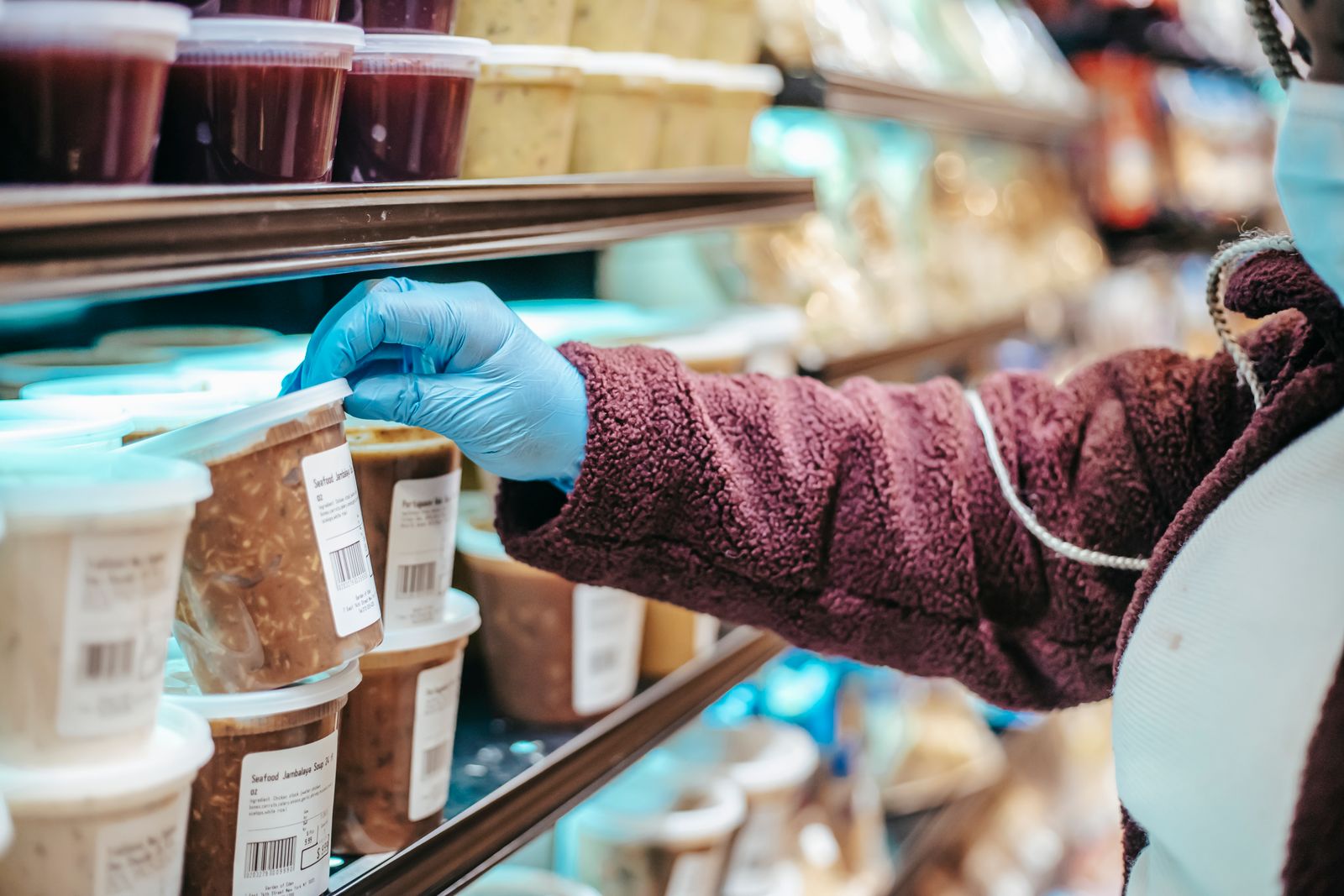
Featured image: Reading a food label while choosing travel food. Photo: Laura James via Pexels.
A translated phrase can open a conversation, but it cannot inspect a kitchen. “Vegan,” “vegetarian,” “dairy-free,” “allergy,” and “no cross-contact” may be understood differently by different people. The safest communication system uses two layers:
- Short layer: one clear sentence that states the requirement.
- Detailed layer: a written card or offline note listing excluded ingredients, preparation questions, and what to do if the venue cannot confirm.
Use this workflow in restaurants, markets, hotels, tour groups, flights, trains, and shared kitchens. It is deliberately different from a phrase-translation page: the goal is not only to say the words, but to decide whether the answer is reliable enough for your situation.

Image credit: Pexels source page. General planning illustration; verify current licensing and attribution requirements before publication.
Vegan, allergy, and cross-contact are different
Vegan ingredient requirement
A vegan request concerns avoiding animal-derived foods. A traveler may exclude meat, poultry, fish, shellfish, dairy, eggs, honey, gelatin, animal fat, or other ingredients according to personal practice. Hidden sources can occur in stocks, sauces, seasoning mixes, frying fats, dough, desserts, and toppings.
A vegan request normally needs ingredient and preparation questions. It does not automatically tell staff that accidental exposure creates a medical emergency.
Food allergy requirement
A food allergy is a medical issue involving a specific allergen and a personal medical plan. Name the allergen clearly, explain that accidental exposure matters, and ask whether the venue can verify ingredients and preparation. Do not use “I am vegan” as a substitute for an allergy statement, and do not describe a dish as medically safe based only on a translation, icon, or general reassurance.
Carry the medication and emergency information your clinician has instructed you to carry. If you need prescriptions, an action plan, or special documentation abroad, arrange that before departure.
Cross-contact requirement
Cross-contact means unintended transfer of an allergen or unwanted ingredient to another food. Ask concrete questions about shared pans, grills, fryers, boards, knives, utensils, gloves, storage containers, and preparation surfaces. The word may not be familiar, so explain the specific contact you need to avoid.
Food-service guidance can explain the concept, but it cannot inspect a foreign kitchen. Your decision should depend on your own medical plan and what the venue can genuinely confirm.
The five-step communication workflow
This is a decision workflow, not a guarantee. It helps you notice when a conversation has not produced enough information.
Prepare before translating
Write the non-negotiables
Create three private lists before the trip:
- Ingredients: which animal-derived ingredients and specific allergens must be excluded?
- Preparation: must shared utensils, pans, grills, fryers, boards, or storage be avoided?
- Decision rule: what will you do when a recipe is unknown, the worker is unsure, or the kitchen cannot separate equipment?
Do not borrow another traveler’s decision rule. Ethical vegan practice, food preference, diagnosed allergy, and anaphylaxis risk can require different choices. If you do not know what your medical requirement is, ask your clinician before traveling.
Identify the setting
Adapt the message to the place:
- Restaurant: ask for the person who can verify the ingredients and preparation.
- Market or bakery: request the ingredient label and ask about shared equipment if relevant.
- Hotel or host kitchen: discuss ingredients, utensils, storage, and cleaning before cooking.
- Street-food stall: ask whether the vendor can identify ingredients and explain the cooking surface.
- Flight, train, or tour: ask what is pre-packed, what can be verified, and what backup food is allowed.
- Pharmacy or clinic: communicate the medical issue separately from a food order.
Use two message lengths
The short message should state the requirement and decision point. For example: “I avoid animal-derived ingredients. Can someone verify the recipe and preparation?” If there is an allergy, name the allergen and state that accidental contact matters.
The detailed message can list excluded ingredients, common hidden sources, preparation questions, and an uncertainty instruction. Have important wording reviewed by a fluent speaker. For allergy communication, use a recognized chef-card resource or a person who understands allergy language rather than asking a translation tool to improvise a medical statement.

Image credit: Pexels source page. General travel-research illustration; verify current licensing and attribution requirements before publication.
Ask about the complete recipe
Once the requirement is understood, ask about hidden ingredients rather than only the visible main food. Useful prompts include:
- What is in the stock, broth, sauce, marinade, paste, dressing, or seasoning?
- Does the dough, wrapper, noodle, dessert, or topping contain dairy, egg, honey, gelatin, or the named allergen?
- Which oil or fat is used?
- Can I see the packaged ingredient label?
- Has anything been substituted today?
- Who can verify the answer?
These are prompts, not evidence that a cuisine or venue always uses a particular ingredient. Recipes, suppliers, menus, and staff knowledge vary.
Ask about preparation separately
After the recipe is clear, ask how the food will be prepared. Use concrete nouns: shared grill, fryer, pan, board, knife, utensil, glove, storage container, or cooking oil. If separation matters, ask what the kitchen can actually do.
A response such as “we use the same grill but clean it” is information, not an automatic approval or rejection. Your decision depends on your own requirement and medical plan. If the venue cannot provide the level of separation you need, choose another option.
Verify with the right person
A server may need to ask the chef, manager, guide, host, or manufacturer. Give the person time to check rather than accepting a guess. If the answer changes between staff members, treat the contradiction as a reason to pause.
Repeat the answer back
Summarize the key point: “So there is no dairy or egg in the recipe, and it is prepared in a clean pan, correct?” For an allergy, repeat the exact allergen and preparation requirement. This can reveal misunderstandings before food is served.
Menus, labels, and verbal reassurance
Menu symbols are clues, not complete verification
A vegan or allergy symbol can help you find candidates, but it may not explain recipe changes, sauces, shared equipment, or what the symbol means in that venue. Ask what the symbol covers and whether the staff can verify today’s preparation.
Packaged labels can provide stronger evidence
For packaged foods, read the current ingredient list, allergen statement, precautionary wording, and country-specific label. Similar products can have different formulas in different markets. A familiar brand name is not proof that the local package is identical.
Verbal reassurance needs detail
“It should be fine,” “no problem,” or “it is vegetarian” may not answer your question. Ask politely for the specific ingredient or preparation confirmation you need. If the answer remains vague, use your decision rule rather than escalating pressure on staff.
What to do when communication breaks down
If “vegetarian” is offered
Clarify that vegetarian may still include dairy, eggs, or other ingredients you avoid. If you have an allergy, restate the allergen and medical importance separately.
If staff offer to remove an ingredient
Ask whether the ingredient is also present in sauce, stock, garnish, oil, dough, or shared equipment. Removing a visible topping does not necessarily change the complete recipe or preparation.
If the venue is busy
Keep the short card ready, ask for the person who can verify, and avoid delivering a long explanation in a noisy queue. If the answer cannot be checked, leave the decision open and use a backup.
If you receive a different item
Pause before eating. Compare the item with what was confirmed, ask again, and do not rely on an apology as evidence. If the dish cannot be identified or verified, decline it and use another option.
If a companion orders for you
Give the companion the same written message and decision rule. Ask them to repeat the answer back to you before accepting the food. Responsibility for the final decision should remain clear, especially when a medical allergy is involved.

Image credit: Pexels source page. General travel communication illustration; verify current licensing and attribution requirements before publication.
Keep a simple verification record
For a meal that matters, record four things:
- What you asked.
- Who verified it.
- What was confirmed and what remained unknown.
- Why you accepted, modified, declined, or used a backup.
A note can be as short as “chef confirmed no dairy or egg; shared fryer not used; accepted.” Do not treat this as a permanent restaurant guarantee. Menus, staff, suppliers, recipes, and equipment can change. The record is for your decision in that moment.
Build a travel communication kit
- Printed vegan or allergy card in the relevant language
- Offline phone copy of the same message
- Ingredient words for the specific allergen or animal-derived foods
- Medication and emergency information according to your medical plan
- One food-based backup from the best vegan travel snacks guide
- Saved links to current official travel-health and destination information
- A written fallback decision for uncertain meals
Keep the card separate from passports and payment cards so you can hand it to a server without exposing private documents. Use the vegan travel language cards guide for a dedicated card-building workflow and how to say “I’m vegan” in another language for phrase-level support.
Choose a card format that fits the risk
Use more than one format when the meal matters: keep a printed card in your passport case and an offline phone copy, then share the same wording with a companion. A professional translation can improve clarity, but no card can verify a kitchen or replace your medical action plan.
| Format | Useful when | Check before relying on it |
|---|---|---|
| Printed card | Ordering in a busy venue or when your phone may be unavailable | Correct destination language, named allergen or animal-derived ingredients, cross-contact wording, and legible text. |
| Offline phone note or PDF | You need a backup, multiple languages, or a copy for a companion | Download it before leaving coverage and keep the screen readable without an app or network. |
| Professionally translated or custom card | The request is complex, medical, or difficult to explain consistently | Confirm the exact allergens, translation coverage, and that the card is communication support, not a safety guarantee. |
| Spoken explanation | Clarifying a label or confirming the answer face to face | Do not use it as your only record when a written message can reduce misunderstanding. |
Carry the format that matches your situation, and test the wording with a fluent speaker before departure. If your clinician or action plan requires a stricter process, follow that rather than a generic card.
Adapt the questions to common travel settings
Restaurants and cafés
Show the short card before ordering, not after the food arrives. Ask whether the person taking the order can check with the kitchen. When a menu lists a plant-based dish, ask about stock, sauces, garnishes, butter, egg wash, honey, and the cooking surface. If the staff cannot answer, ask whether there is a packaged option with a current label.
Markets, bakeries, and food stalls
Point to the exact product and request the package or ingredient list. Do not assume that two items from the same shop share the same recipe. For unpackaged food, ask what is in it and how it was prepared. A busy stall may not have the information or separation you need, so identify a nearby shop or packaged-food backup before you become hungry.
Hotels, hosts, and shared kitchens
Explain the requirement before cooking begins. Discuss which pan, board, knife, utensils, sponge, and storage container will be used. If you are managing an allergy, keep your medication and emergency information accessible and make sure the host understands that the request is not only a preference. If the kitchen setup cannot meet your decision rule, use sealed food or another meal plan.
Flights, trains, and organized tours
Ask what food is pre-packed, what information the operator can confirm, and whether you may bring your own backup. Policies vary by carrier, route, and country, so verify them directly before departure. Do not assume that requesting a special meal means the ingredients or preparation meet your personal threshold. Carry enough permitted backup food for delays according to current transport and customs rules.
Make uncertainty part of the plan
Uncertainty is not a communication failure you must solve by asking the same question louder. It is a decision signal. Before travel, decide which answers are sufficient for you and which are not. A useful private scale is:
- Confirmed: the relevant ingredient and preparation details were checked by an appropriate person or visible label.
- Partly confirmed: some details are known, but a material ingredient or preparation step remains unclear.
- Unconfirmed: staff are guessing, the message was not understood, or no one can check.
Only you and your medical team can determine how these categories affect an allergy decision. For vegan choices, you may decide that a partly confirmed meal is not acceptable because the recipe is unknown. For a medical allergy, your action plan may require a stricter threshold. The useful habit is to make the rule before a rushed meal, not while someone is waiting for an answer.
Packaged food is not automatically risk-free, and a vegan restaurant is not automatically able to meet every allergy-control requirement. Conversely, a mixed-menu venue may be able to answer a specific request clearly. Judge the evidence available for the particular item and moment.
Privacy, dignity, and respectful communication
You do not need to disclose more medical detail than is necessary to communicate the requirement. A short statement can say what must be avoided and what needs to be verified. Keep personal medical documents private, and show a detailed card only to the person who needs it.
Be direct without blaming staff for not knowing a term in your language. Use the same wording consistently, allow time for a check, and thank people who verify carefully. If the venue cannot meet the request, declining the meal is a practical decision, not an insult. A calm fallback plan protects both the traveler and the staff from being pushed into a guess.
Frequently Asked Questions
Is translating “I’m vegan” enough abroad?
Usually not. Translation starts the conversation, but you may still need to ask about hidden ingredients, preparation, shared equipment, and who can verify the answer.
How should I explain a food allergy differently from veganism?
Name the specific allergen and explain that accidental contact matters. Keep the allergy statement separate from an ethical or preference-based vegan request, and follow your medical action plan.
What does cross-contact mean in a restaurant conversation?
It means unintended transfer of an allergen or unwanted ingredient. Ask about shared grills, fryers, pans, boards, knives, utensils, gloves, and containers using concrete language.
Can a vegan menu symbol confirm that a meal is suitable?
It can identify a candidate, but it may not explain recipe changes, preparation, shared equipment, or allergy controls. Ask what the symbol means and verify the current dish.
What should I do if staff are kind but uncertain?
Thank them, ask whether a chef, manager, host, or label can confirm, and use your fallback if the important information remains unknown. Kindness is not the same as verification.
Should I keep notes about what a venue confirmed?
For important meals, a short note can help you remember what was checked and why you decided. Treat it as a time-specific record, not a permanent guarantee.
Related Guides
Prepare short and detailed messages for real food conversations.How to Say “I’m Vegan” in Another Language
Learn the phrase-level starting point for communicating abroad.Vegan Restaurant Guides for Travel
Verify menus, ordering questions, and backup options before dining out.