Rome Vegan Street Food: Eating on the Move
Vegan street food in Rome is easiest when you plan around food types, walking areas, opening windows, and a backup rather than chasing a fixed list of stalls. Start with the route for the day, identify a likely street-food stop, confirm the current ingredients, and keep a grocery or second venue available if the queue, menu, or timing changes.
Updated 24 October 2026. Recheck menus, recipes, opening hours, market schedules, ingredients, transport, prices, and service policies before travelling.
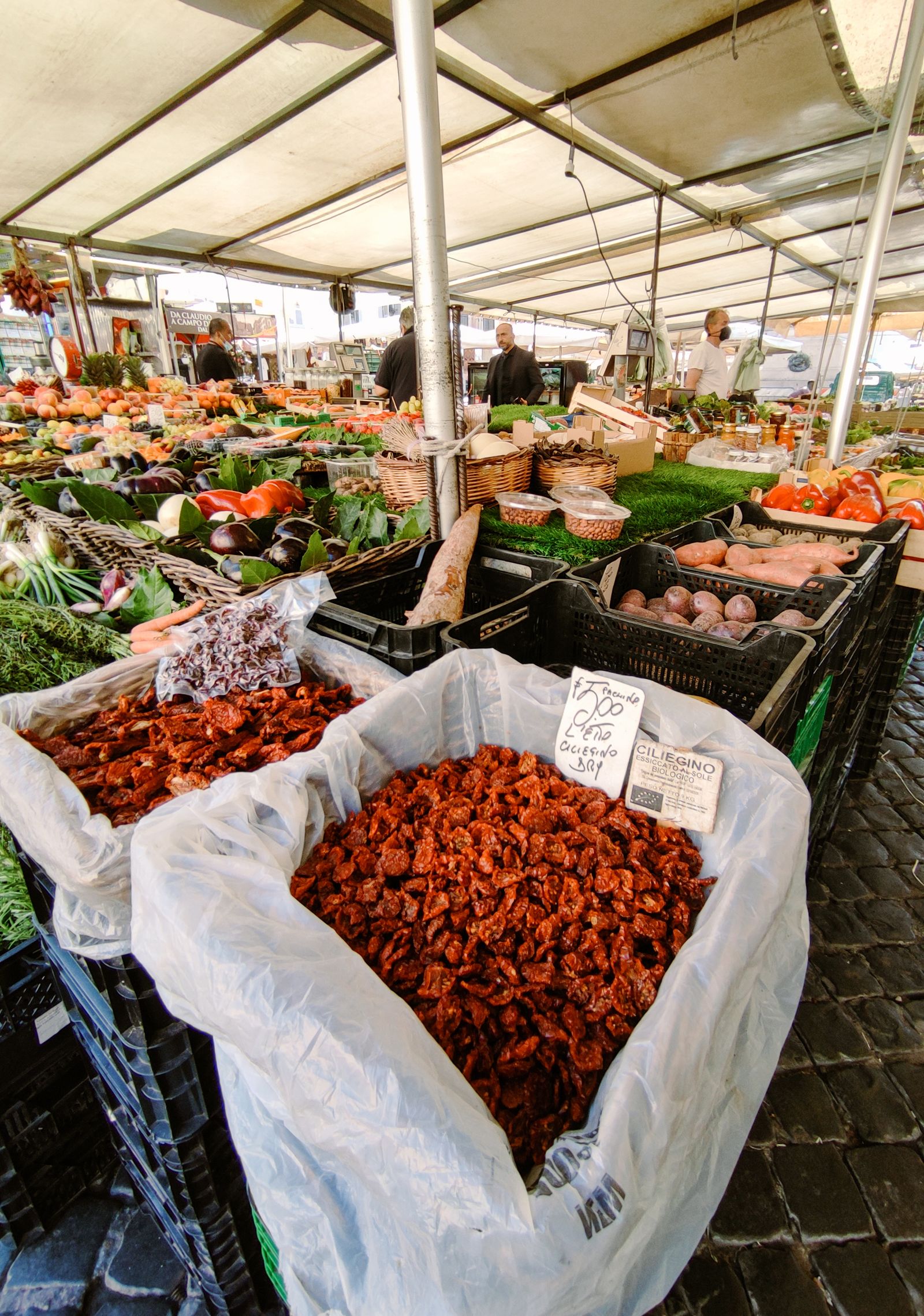
Featured image: Campo de Fiori market, Rome. Photo: Yuliya Duzhaya via Pexels.
This guide is about eating on the move in Rome. It covers pizza al taglio, pizza bianca, supplì-style foods, fried vegetables, markets, bakery counters, gelato, coffee stops, neighborhood planning, communication, and food rules. It is a practical planning guide, not a permanent restaurant directory or a claim that every traditionally vegetarian dish is vegan.
Research note: Menus, recipes, opening hours, market schedules, ingredients, transport, prices, and service policies change. This article does not claim first-hand visits to every venue. Confirm the current menu and preparation with the business before relying on a specific meal.
Location: Rome, Italy
Rome is a large city with historic districts, busy transport corridors, markets, bakeries, and attractions spread across different areas. A street-food plan should use the neighborhood already on the day’s route. Crossing the city for one unverified snack can cost more time than it adds.
Official Rome tourism informationOpen Rome map
Use official tourism information for current city context and check the relevant transport operator before a timed food stop. The map link is a planning aid, not proof that a particular business is open or suitable.
Useful route anchors to check
Campo de’ Fiori: The open-air market square is a practical daytime route anchor for produce and walking, but its trading pattern and individual stalls can change. Use the official tourism listing for the current place context, then confirm what is actually available when you arrive.
Campo de’ Fiori detailsOpen Campo de’ Fiori map
Mercato Centrale Roma: Its official information page currently lists daily opening hours of 7:30 a.m. to 11:30 p.m. and places it about five minutes on foot from Roma Termini. Treat those details as a starting point, not a guarantee: recheck the official page, individual stalls, and your route on the day.
Mercato Centrale Rome infoOpen Mercato Centrale map
What counts as useful vegan street food in Rome?
Street food is not limited to a named “vegan street-food shop.” In Rome, the useful category can include food sold by the slice, bakery items, market produce, quick counter service, takeaway portions, simple pasta or vegetable dishes, and packaged food bought for a walk. The practical question is whether the food can be checked, carried, eaten within the route, and replaced if the first option fails.
Traditional names can be helpful research clues, but they are not automatic vegan guarantees. Dough may contain animal fat, a rice croquette may contain cheese, a sauce may contain anchovy or stock, and a vegetable dish may be finished with cheese or butter. Ask about the actual item at the current business.
| Food situation | What to verify | Useful backup |
|---|---|---|
| Pizza by the slice | Dough, toppings, cheese, and counter separation | Another bakery or a grocery snack |
| Fried snack | Filling, batter, fryer, and shared preparation | Packaged food or a confirmed meal nearby |
| Market stop | Trading day, stall hours, ingredients, and payment | Supermarket near the accommodation |
| Gelato or dessert | Base, flavor ingredients, cones, and cross-contact needs | Fruit, sorbet with confirmed ingredients, or a sealed snack |
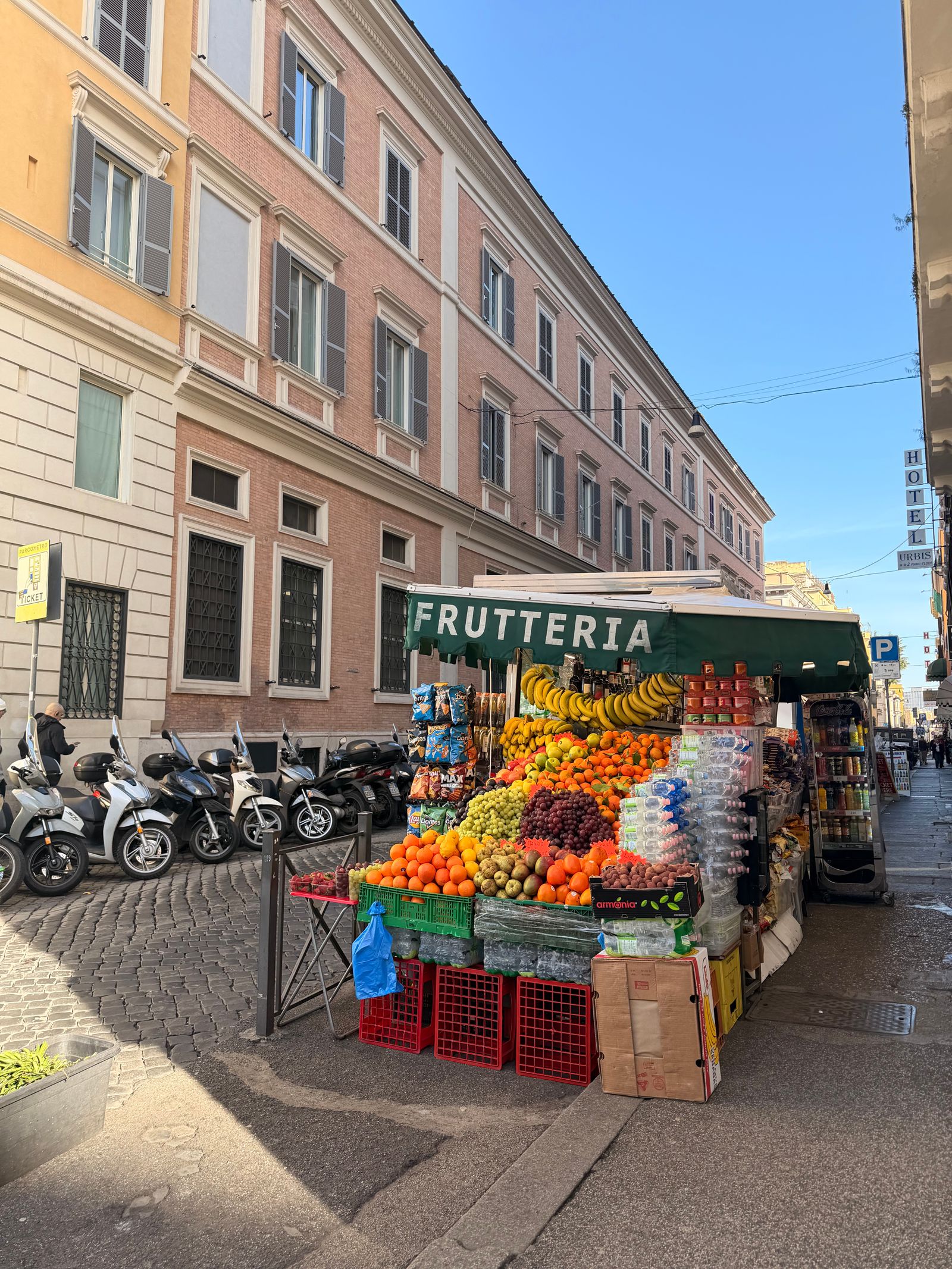
Pizza al taglio and bakery counters
Pizza sold by weight or by the slice can fit a walking day because it is portable and easy to portion. The planning challenge is the base and topping, not only the visible vegetables. Ask whether the dough contains lard or another animal-derived ingredient, whether the topping includes cheese, and whether a vegetable cream contains dairy.
Pizza bianca can look simple while still requiring a dough check. A tomato-topped slice may be easier to assess, but confirm the dough, oil, seasoning, and any finishing ingredients. Do not assume that a plain-looking slice is vegan because it has no visible cheese.
At a busy counter, point to the item and ask the shortest useful question. If communication is difficult, show a prepared Italian sentence and ask the staff to confirm the specific item. Keep the receipt or menu note only as a record of what you checked that day, not as a future guarantee.
Supplì, croquettes, and fried foods
Supplì is a useful search term for a Roman rice croquette, but the traditional version commonly involves ingredients that are not vegan. A vegan version may exist at a particular venue, yet the recipe, filling, or availability can change. Confirm the filling, coating, cooking fat, and fryer situation before ordering.
The same method applies to fried vegetables, arancini-style items, and other counter snacks. Ask whether the batter includes egg, whether the filling includes cheese, and whether the fryer is shared when cross-contact matters. A vegan ingredient list and an allergy-safe kitchen are different questions.
If the staff cannot answer clearly, move to the next option. Street food works best when the plan is flexible. It is not worth turning one snack into a long negotiation when the route already has another food window.
Markets and produce stops
Markets can support a street-food day with fruit, vegetables, bread, olives, nuts, packaged items, and other foods that need little preparation. They are also useful when a restaurant is closed or a traveler needs breakfast for the next morning. Treat the market as a current event, not a permanent daily service. Campo de’ Fiori and Mercato Centrale Roma can be useful route anchors, but neither replaces a current ingredient check for prepared food.
Check the market’s current location, trading days, hours, payment expectations, and access from the itinerary. A market may be active during one part of the day and quiet later. If the trip depends on it, identify a nearby supermarket before leaving the accommodation.
Ask about prepared foods rather than assuming that a vegetable item is vegan. Deli counters can use cheese, fish, animal stock, or shared utensils. Whole produce and sealed packaged food can be simpler when the traveler has limited language or time.
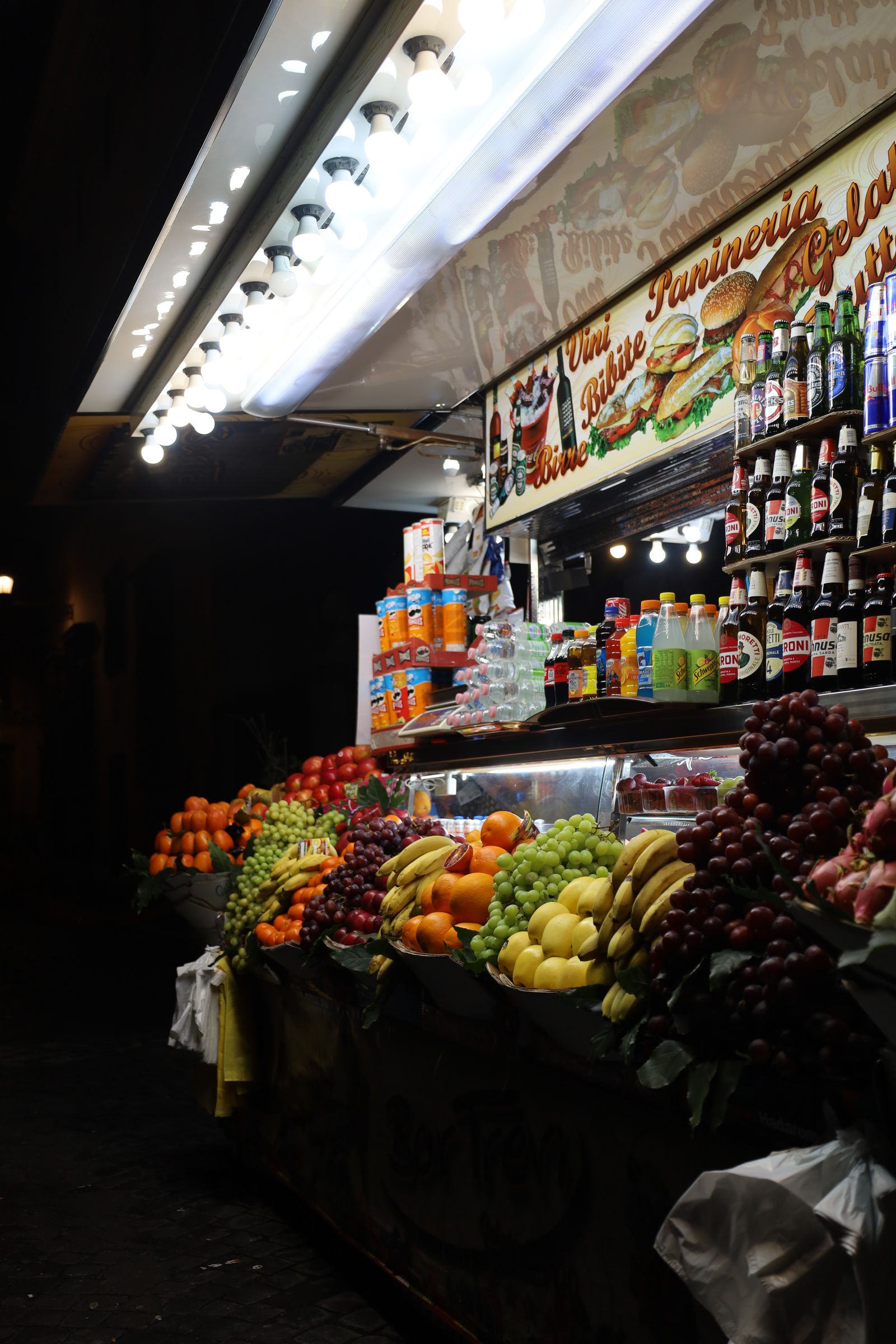
Gelato, sorbet, coffee, and quick sweets
Dessert stops need the same verification as savory food. Ask whether the gelato base contains dairy, whether a fruit flavor is made with a shared base, and whether the cone or topping contains milk, egg, or honey. A flavor name alone is not enough evidence.
Sorbet may be dairy-free, but recipes vary. Confirm the current ingredients and ask about shared scoops if cross-contact is important. Coffee itself is usually simple, while milk-based drinks require the plant-milk option to be confirmed. Ask what alternatives are available rather than assuming a particular brand or ingredient.
Plan sweets as one part of the route. A dessert stop should not replace the dependable meal if the traveler has a long walking day, medication-related food needs, or a late transport connection. Carry a compact backup and use the dessert as an optional stop.
Neighborhood planning without a rigid food tour
Rome is easier to eat in when each day has a food area. Combine one attraction cluster, one likely street-food stop, one backup, and one grocery option. The best area is usually the one that fits the day’s walking and transport rather than the one with the most attractive search results.
Historic center routes can become crowded and slow. Trastevere, Testaccio, Monti, the area around Termini, and the Jewish Quarter may appear in food research, but a neighborhood name is not proof of a current vegan option. Use these as route-planning labels and verify each business at the time of travel.
For a short visit, choose two or three food windows per day, not a list of ten addresses. Save the exact branch, current opening window, map pin, and one nearby alternative. If the planned venue is across the city from the afternoon activity, decide whether the detour is really worth the transport time.
How to ask about vegan ingredients
Prepare a short explanation in Italian before leaving. Useful questions should cover dairy, egg, honey, fish, meat, stock, and animal fat. A concise written note can help with a busy counter, but it cannot prove that the kitchen can manage an allergy or prevent cross-contact.
Ask about the exact item rather than saying only “vegan options?” Then repeat the final request before paying. If the answer is uncertain or staff members disagree, treat the venue as unverified and use the backup. Clear communication is more valuable than a confident assumption.
For medical allergies, explain the medical risk separately and follow professional medical advice. Vegan suitability does not equal allergen control. Do not present a restaurant as safe for an allergy without current, direct evidence.
Build a street-food day around time and energy
Street food is most useful when it reduces friction. Put a food stop near the next attraction, transport point, or accommodation. Allow time for queues, finding the counter, checking ingredients, and sitting or walking to a place where the food can be eaten comfortably.
Morning, afternoon, and evening have different risks. A bakery may help early, a market may have a narrow daytime window, and a restaurant may open later than the traveler expects. Check the current local time and opening information on the same day when the meal matters.
Protect water, shade, rest, and food storage during hot weather. A snack that works in a cool room may melt or spoil in a day bag. Keep food sealed, carry it in a suitable container, and replace anything that has become unsafe or impractical.
Use a two-layer backup
The first backup is another venue or counter within a practical distance. The second backup does not depend on restaurant service. It could be a supermarket, a bakery item with verified ingredients, a packaged snack, or food already carried from the accommodation.
Save the backup before leaving the main route. Record its address, opening window, and the time needed to reach it. A map pin without current hours is incomplete. A venue on the other side of Rome is not a useful backup for a tired traveler with a timed train.
Use the backup without treating it as a failure. The goal is a dependable food day, not a perfect list of famous stops. A practical fallback protects the rest of the itinerary and makes it easier to enjoy the city.
Street-food planning for different trip types
| Trip type | Plan first | Carry or save |
|---|---|---|
| Short city break | One neighborhood food cluster | One nearby backup and a compact snack |
| Long sightseeing day | Food near the middle of the route | Water, durable food, and rest time |
| Family or group trip | Shared timing and different dietary needs | Written questions and flexible options |
| Food-sensitive traveler | Direct ingredient confirmation | Medical supplies and a reliable personal backup |
| Early departure | Food before leaving accommodation | Breakfast backup and transport buffer |
How to keep the plan current during the day
Rome plans change because a walk takes longer than expected, a site has a queue, the weather shifts, or a traveler needs a rest. Recheck the next food stop after each major movement instead of trying to preserve a morning plan exactly. Confirm the business name, branch, current hours, and route from the place where you are standing. A saved screenshot can be useful offline, but it should be treated as a record from the time it was captured.
Keep a simple note with three labels: confirmed, possible, and backup. Confirmed means the current source or business has answered the relevant question. Possible means the option looks promising but still needs a menu or ingredient check. Backup means it is available as a fallback if the primary meal fails. These labels prevent a search result from becoming an accidental promise.
When traveling with other people, share the note so everyone knows the next decision. Agree on how far the group is willing to walk, whether a sit-down meal is required, and which food issues are medical rather than preference-based. A shared plan makes it easier to change course without repeating the whole search.
Food, access, and responsible expectations
A useful street-food guide should not imply that a city owes a traveler a particular menu or that every traditional recipe has one fixed form. Recipes, businesses, and service styles are part of a living food culture. Ask respectfully, pay attention to the answer, and choose a different option when the kitchen cannot meet the requirement.
Use current local information for the final decision. Do not quote an old price, opening hour, menu photo, or review as if it were permanent. If a source conflicts with the restaurant, record the uncertainty and select a safer route. This approach makes the article more useful for future travelers because it teaches a method instead of preserving fragile claims.
What to verify before relying on a Rome street-food stop
- Exact business or market name and location.
- Current opening day and service window.
- Dough, filling, sauce, topping, and cooking-fat ingredients.
- Whether the item is vegan or only vegetarian.
- Shared fryer, grill, scoop, or preparation concerns when relevant.
- Payment, queue, seating, takeaway, and access details.
- One nearby restaurant backup and one non-restaurant fallback.
- The route back to accommodation or onward transport.
Frequently Asked Questions
Is Rome easy for vegan street food?
Rome can offer useful plant-based choices, but ease depends on the route, timing, language, and current venue information. A traveler should verify the specific food rather than rely on the city label. Pizza by the slice, markets, packaged foods, and confirmed vegan dishes can all fit a flexible plan.
What Roman street food should a vegan traveler check first?
Start with food that matches the route and has clear ingredients. Pizza al taglio, simple tomato-topped items, market produce, and sealed snacks may be practical starting points, but dough, toppings, sauces, fillings, and preparation still need confirmation.
Is supplì vegan?
Traditional supplì often contains ingredients that are not vegan, so do not assume it is suitable. Ask about the rice mixture, filling, coating, cooking fat, and shared fryer. A vegan version may be available at one business and absent at another.
How can I check whether gelato is vegan in Rome?
Ask about the base, flavor ingredients, cone, toppings, and shared scoop. Sorbet may be dairy-free, but recipes vary. Confirm the current ingredients and separate vegan suitability from allergy safety.
Where should I plan a vegan food stop in Rome?
Choose a stop near the day’s accommodation, attraction, transport route, or neighborhood walk. Historic districts and food areas can be useful planning labels, but the exact business, opening window, and menu must be checked before relying on them.
What is the best backup when a Rome food stop fails?
Use a nearby second venue first, then a grocery or packaged-food option that does not depend on restaurant service. Save both before leaving the accommodation, including current hours and the route needed to reach them.
Useful Sources And Verification
Use these sources to verify current city context, transport, food information, and travel guidance before relying on a specific stop. This article is a planning framework, not a permanent guarantee.
- Roma Capitale tourism information for current city context and visitor planning.
- ATAC Roma for current public transport information.
- Turismo Roma: Campo de’ Fiori for the official place listing.
- Mercato Centrale Roma official information for current opening and access details.
- European Commission food information guidance for general labeling context.
- The Vegan Society international travel guidance for independent practical context on language, accommodation, food backups, and special meals.
Related Guides
`;
console.log({chars:romeNewHtml2.length,words:romeNewHtml2.replace(/<[^>]+>/g,’ ‘).replace(/\s+/g,’ ‘).trim().split(/\s+/).length});