Best Vegan Sunscreen for Travel: How to Choose and Verify Ingredients
Short answer: The best vegan sunscreen for travel is not one universal brand. Choose a current formula whose vegan claim you can verify, whose label gives the protection and water-resistance information you need, and that you will apply generously and reapply. For most adults, the American Academy of Dermatology recommends broad-spectrum, water-resistant SPF 30 or higher, plus shade, clothing, a hat, and sunglasses.
Updated 25 October 2026. Product formulas, stock, labels, and travel rules change; verify the exact product and departure-airport guidance before travelling.
What you’ll find in this guide
Start with the label checklist, separate vegan, cruelty-free, and reef claims, compare current examples, then plan airport rules and your travel kit.
“Vegan” answers one part of a sunscreen decision: the formula should not contain animal-derived ingredients according to the brand’s current claim or certification. It does not automatically tell you whether the product is broad spectrum, water resistant, comfortable on your skin, legal to carry in your cabin bag, or suitable for your destination. This guide separates those decisions so you can check them without relying on vague “natural” or “reef-safe” marketing.
How to choose vegan sunscreen for travel
Start with the exact product and market you will buy. Read the current package or manufacturer page, not only a retailer title. For everyday adult use, look for:
- Broad-spectrum protection against UVA and UVB.
- SPF 30 or higher, as recommended by the AAD.
- Water resistance when you will swim, sweat, or spend long periods outdoors.
- A clear vegan basis, such as a current manufacturer statement or a recognised certification.
- A format you will actually reapply, without avoiding it because of stinging, cast, fragrance, pilling, or mess.
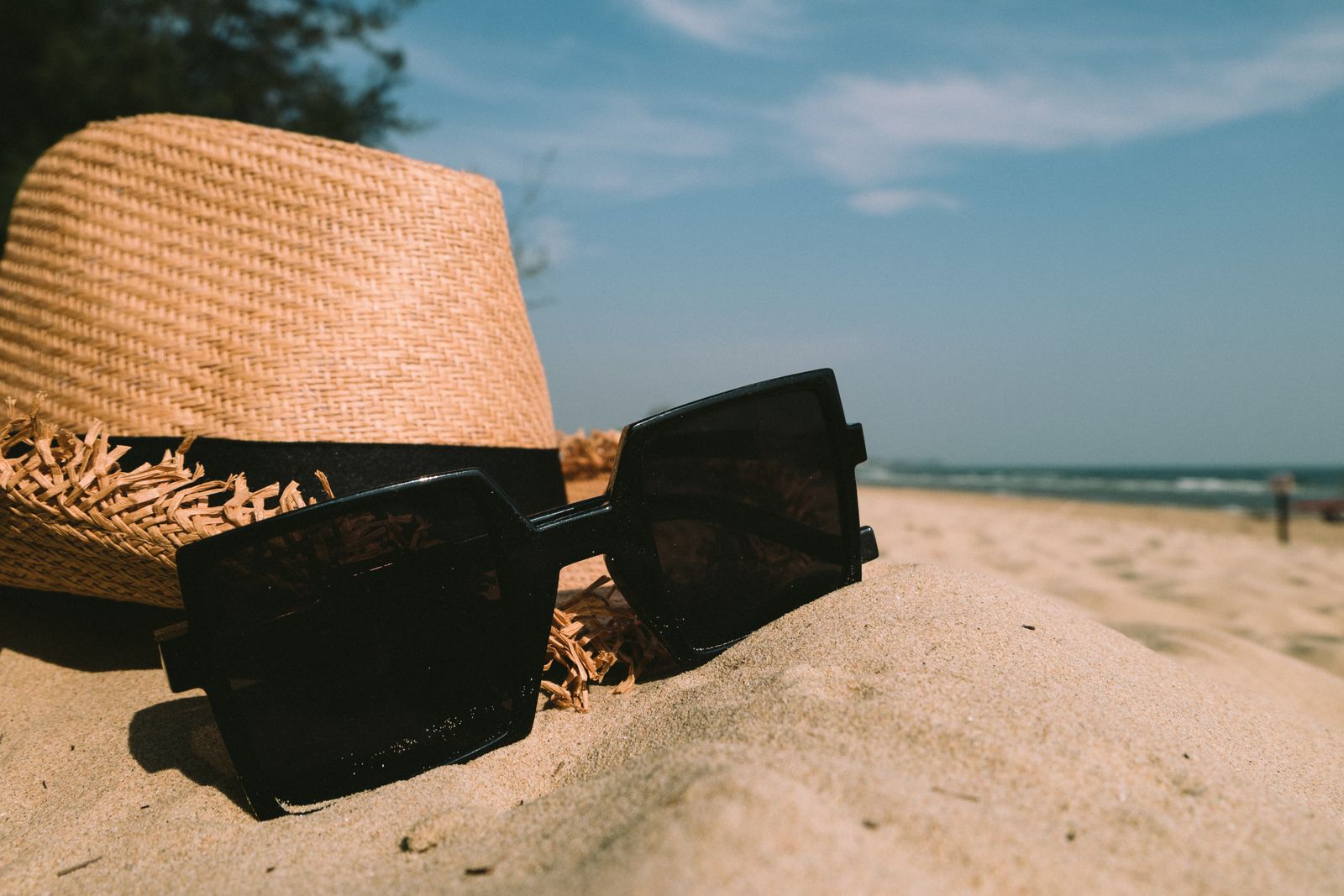
Sunscreen is one layer of protection. AAD also recommends shade, sun-protective clothing, a wide-brimmed hat, and UV-protective sunglasses. Near water, snow, or sand, reflected light can increase exposure, so do not make the bottle your entire plan.

Vegan, cruelty-free, and reef claims are different
Vegan is about animal-derived ingredients or processing according to the brand’s stated standard. Cruelty-free is about animal-testing policies and their scope. A product can make one claim without proving the other, so look for separate evidence.
“Reef-safe” is not a universal certification or a complete environmental guarantee. A dermatology review describes the term as unregulated in U.S. sunscreen marketing, while the AAD says the environmental science remains limited and inconclusive. Check the law and conservation guidance for the place you are visiting, then avoid turning a marketing phrase into a promise.
“Natural,” “clean,” “non-toxic,” and “hypoallergenic” also need context. The FDA notes that cosmetic claims are not a pre-market approval category and that claims must not mislead. For allergies or a diagnosed skin condition, ask a clinician or pharmacist rather than treating a label as medical advice.
Current examples to investigate, not universal winners
These examples are starting points for checking a vegan claim, not permanent rankings. Availability, formulas, packaging, and regional labels can change. Open the linked first-party or certification page before purchase.
| Example | What is currently documented | What you still need to check |
|---|---|---|
| ATTITUDE mineral sun care | The brand’s current collection presents mineral zinc-oxide sun care as vegan and lists SPF 30 and SPF 50 formats. | Check the exact product page, regional label, water-resistance statement, size, and current ingredients. |
| Badger Daily Mineral SPF 30 | Badger’s current product page describes this as a vegan mineral sunscreen with broad-spectrum SPF 30 and 40 minutes of water resistance. | Confirm the current package, active ingredients, water resistance, expiry information, and local availability. |
| Vegan Trademark starting points | The Vegan Society’s sun-care roundup identifies certified products and brands including P20, Green People, and others. | The roundup is not a live stock list. Check the current product page, market, SPF, formula, and travel size. |
ATTITUDE mineral sun care
The current brand collection presents mineral zinc-oxide SPF 50 formats. Treat it as a product-page lead, not a universal recommendation, and check the exact regional label, size, water resistance, and stock.
Badger Daily Mineral SPF 30
The manufacturer describes this product as broad-spectrum SPF 30, 40-minute water resistant, vegan, and cruelty-free. Confirm the current package, expiry information, local availability, and stock before relying on it.
Vegan Trademark starting points
The Vegan Society roundup is useful for discovering certified sun-care products, but it is not a live stock list. Open the linked product or stockist page and verify the market, SPF, formula, and travel size.
Why there is no single “best” here: a mineral stick may be convenient but easy to under-apply; a lotion may cover the body more evenly but take more space; a tinted face formula may reduce visible cast for some people but needs a shade and finish test. Choose by use case, not by the loudest claim.
Choose the right format for the trip
| Travel need | Useful format | Watch-out |
|---|---|---|
| Long body coverage | Lotion or cream | Pack enough; a small tube may not cover several people for several days. |
| Face and eye area | Face lotion or stick | Test eye comfort and finish before departure. A stick still needs adequate coverage. |
| Makeup or visible-cast concerns | Tinted face formula | Check shade, transfer, and whether it is labelled broad spectrum and SPF 30+. |
| Remote water day | Water-resistant lotion | Water resistant is time-limited, not waterproof. Reapply after swimming, sweating, or towelling. |
Application and reapplication that travel plans often miss
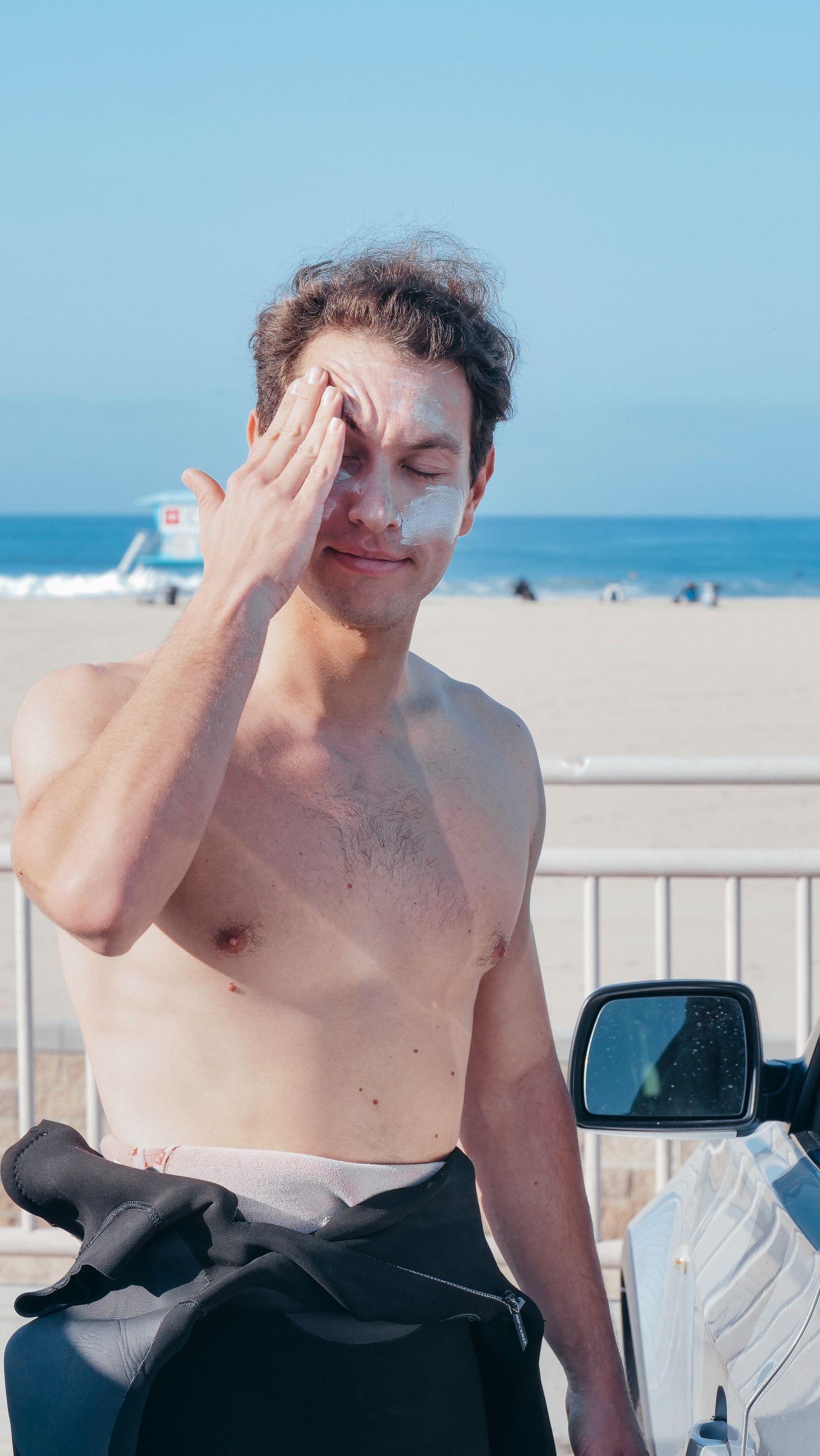
AAD guidance says to apply to dry skin about 15 minutes before going outdoors, use about one ounce for an exposed adult body, and reapply approximately every two hours outdoors or after swimming or sweating, following the bottle. Do not forget ears, neck, hands, feet, hairline, and lips. A lip product with SPF 30 or higher can be useful.
Do not use “waterproof” or “sweatproof” as decision criteria. No sunscreen is waterproof or sweatproof. In the U.S., FDA water-resistance testing supports labelled periods such as 40 or 80 minutes; the exact label and market control the instructions.
Flights, liquids, and destination rules
Rules depend on the departure airport and route. TSA currently lists sunscreen as allowed in carry-on bags when the container is no more than 3.4 oz/100 ml, and checked-bag rules also apply to aerosols. EU cabin guidance generally limits liquid, aerosol, and gel containers to 100 ml in a one-litre bag. UK guidance tells travellers to check the specific airport because rules vary.
Use the airport’s current guidance for your actual departure, connection, and return airports. Keep the original label where possible, protect the cap, and put larger containers in checked baggage only when the airline and safety rules allow it. Do not assume a solid stick follows exactly the same rule as a lotion or aerosol.

A practical vegan sunscreen travel kit
- One main sunscreen with a verifiable vegan claim and the protection level you need.
- A separate face or lip product only if it solves a real comfort or coverage problem.
- A hat, UV-protective sunglasses, and clothing that covers exposed skin.
- A leakproof pouch and enough supply for the whole itinerary.
- A saved manufacturer page or photo of the label for ingredient and use instructions.
Patch-test a new formula before departure. Do not make the first application on a long flight, hot beach day, or remote excursion. Stop using a product that causes a reaction and seek medical advice when needed. Replace sunscreen when it is expired, its colour or consistency changes, its packaging is damaged, or the current formula cannot be identified.
Frequently asked questions
What makes sunscreen vegan?
Look for a current manufacturer statement or recognised certification that addresses animal-derived ingredients. If an ingredient’s origin is unclear, ask the brand instead of guessing from the product name.
Is vegan sunscreen automatically cruelty-free?
No. Vegan concerns ingredients; cruelty-free concerns animal testing and the scope of the company’s policy. Check both claims separately.
Is mineral sunscreen always better for travel?
No. Mineral and chemical filters can both provide effective protection when the product is appropriately labelled. Choose the formula you can apply generously and reapply, while following professional advice for sensitive skin.
Can I take sunscreen on a plane?
Usually yes, but liquids, aerosols, and gels are subject to airport rules. Check every departure and connection airport; a 100 ml cabin limit is common, but local rules can change.
What does reef-safe sunscreen mean?
It is not a universal guarantee. The term is inconsistently defined, so check local rules and conservation guidance rather than relying on the front of the bottle.
How often should I reapply?
Follow the label. AAD guidance says approximately every two hours outdoors and after swimming or sweating. Water-resistant does not mean waterproof.
Useful Sources And Verification
Checked 25 October 2026. A Valentin competitor review covered My Vegan Travels, The Kind Life, Pacifica Beauty, The Earthling Co, and World of Vegan for comparison and discovery only; useful patterns included travel-size filters, use-case scorecards, format comparisons, and FAQ coverage. No wording, rankings, or images were copied. Guidance was compared with the American Academy of Dermatology sunscreen guidance, FDA sunscreen labelling and testing guidance, FDA cosmetics-claims guidance, TSA sunscreen rules, EU cabin-liquids guidance, The Vegan Society’s vegan sun-care roundup, Badger manufacturer page, and the current ATTITUDE sun-care collection. Product formulas, claims, prices, stock, and travel rules change; verify the exact label and airport guidance before purchase or departure.