
Best Non-Dairy Milk Brands for Vegan Travel: What to Choose and Pack
Short answer: The best non-dairy milk for travel is the one that fits your use, allergy needs, storage plan, and destination. For most trips, choose a small shelf-stable oat or soy drink, pack one unopened backup, and buy chilled barista milk only when you have a fridge. Compare the current ingredients and Nutrition Facts label because formulas, pack sizes, and availability vary by country.
Updated 25 October 2026. Brand formulas, allergen information, availability, packaging, airline rules, and local stock can change, so check current product details before travelling. Featured photo: Gerardo Pantoja via Pexels.
Non-dairy milk looks simple until you pack it. A 1-litre carton is useful for a villa kitchen but awkward in a carry-on. A café-friendly oat drink can be excellent for coffee but too bulky for a day bag. Soy may be the most useful choice when protein matters, while almond, coconut, and pea drinks can be better for a specific allergy or taste preference. This guide compares travel formats instead of pretending one brand is best for everyone.
What you’ll find in this guide
Start with the travel constraint, then choose the product:
pick a base for the trip, choose cartons, powders, or local packs, compare current brand formats, match the drink to coffee, read protein and fortification labels, check allergens, plan airport security, store it safely, substitute locally, and pack only what you will use.
Check US liquid rules
Use the packing guide
Save offline product notes
Check hotel fridge needs
Best default for transit
One small shelf-stable oat or soy carton is usually more useful than a large chilled carton, because it can wait unopened until you have a fridge.
Best for coffee
Barista-labelled products are designed for steaming and foam, but formulas differ by brand and country. Carry a backup if the café’s plant milk is uncertain.
Best for strict needs
Choose by the exact allergen statement and nutrition label, not by the front-of-pack base or a familiar brand name.
Which non-dairy milk is best for travel?
Answer: For most travellers, a shelf-stable oat or soy drink in a small carton is the best starting point. Oat works well in coffee and cereal; fortified soy usually offers a stronger protein profile; almond and coconut can suit taste or allergy preferences but may be lighter in protein. Pick the product that solves your actual trip instead of chasing a universal ranking.
| Your priority | Start with | Why |
|---|---|---|
| No fridge before opening | Shelf-stable oat or soy | Can live in luggage or a pantry until opened |
| Protein for breakfast | Fortified soy or pea drink | Often more protein than almond, rice, or coconut drinks; check the label |
| Flat whites and lattes | Barista oat, soy, or almond | Formulated for steaming and foam; use the current brand instructions |
| Nut avoidance | Oat, soy, or pea after label checks | Avoid assuming “plant-based” means nut-free |
| Small day-bag backup | Unopened mini carton or sachet | Less waste and weight than carrying a full carton |
What format should you pack?
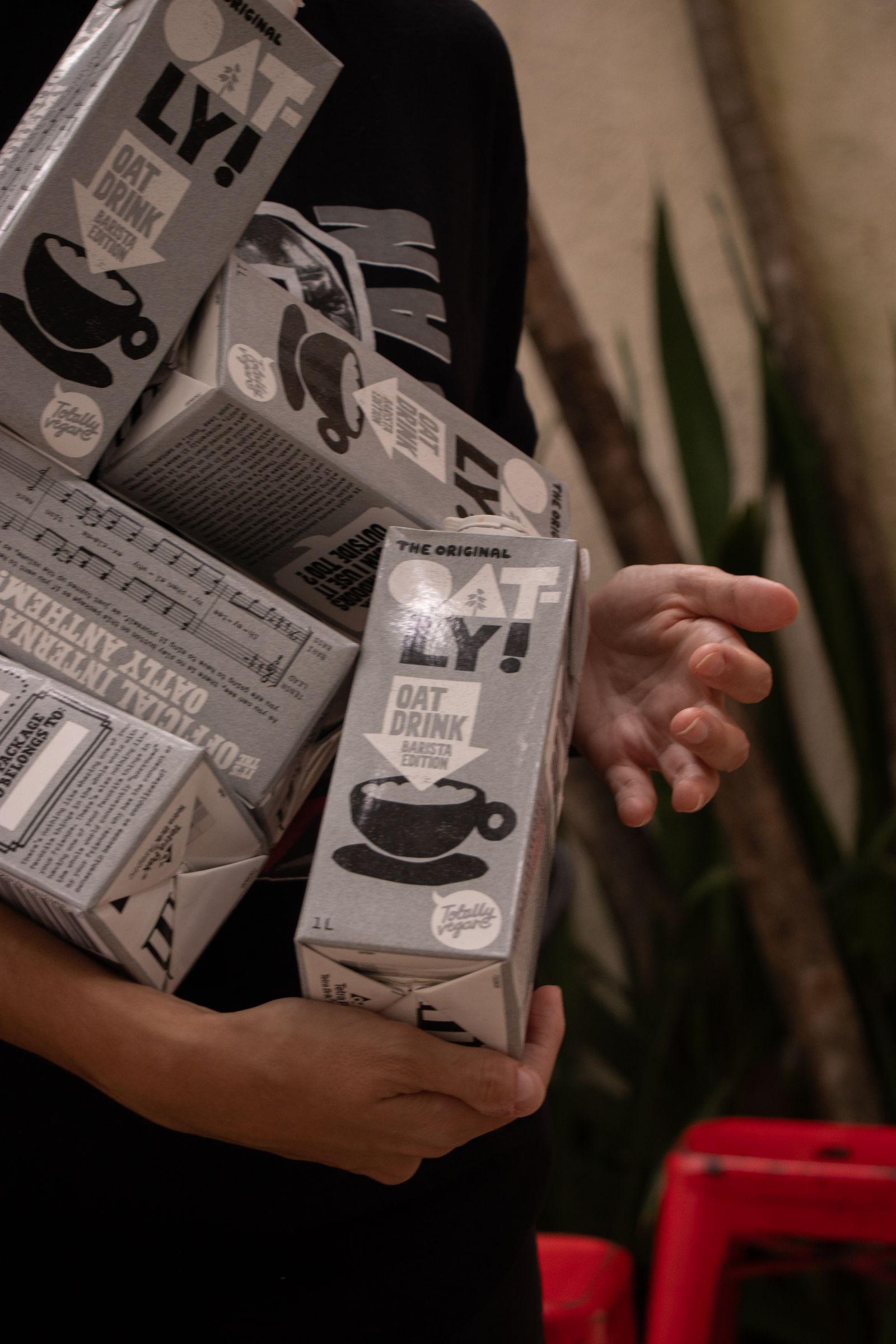
Answer: Choose the smallest format that covers your first use. Shelf-stable cartons are best for an arrival-day backup; chilled cartons are better when you already have a fridge; powder or concentrated products reduce weight but require safe water and may not behave like milk in coffee. Packaging is a travel decision, not a minor detail.
| Format | Best use | Travel drawback |
|---|---|---|
| Shelf-stable carton | Flight arrival, hotel pantry, road trip, emergency backup | Bulky; refrigerate after opening |
| Small single-serve carton | Day bag, breakfast, children, one coffee | More packaging per serving; flavour choices may be sweetened |
| Chilled 1-litre carton | Rental kitchen or longer stay with a fridge | Needs cold storage from shop to accommodation |
| Powder or concentrate | Light packing and remote travel | Texture, mixing, water quality, and coffee performance vary |
Silk’s official shelf-stable pages state that its original soy and oat drinks do not need refrigeration before opening and can be stored unopened in a pantry. Oatly says unopened shelf-stable oat drink can stay at room temperature for almost a year. Still, follow the exact carton instructions in the country where you buy it.
Which non-dairy milk brands are useful for travel?
Answer: The most useful brands depend on market and format. Silk is a strong US shelf-stable option; Oatly offers a broad oat range including Barista products; and Alpro has a European Barista collection across oat, soy, almond, and coconut. These are practical starting points, not permanent winners. Check current pack size, ingredients, allergen statement, and storage directions before purchase.
| Brand or range | Travel angle | Check before buying |
|---|---|---|
| Silk Shelf-Stable Original Soymilk | Pantry-friendly, US-focused, 8g protein per serving on the cited product page | Contains soy; current US label includes added sugar; country availability |
| Silk Shelf-Stable Original Oatmilk | Shelf-stable oat option for coffee and cereal | Current ingredients, serving size, and local stock |
| Oatly Oatmilk Barista | Useful when coffee texture matters and the range is sold locally | Chilled versus shelf-stable version, country formula, carton size |
| Alpro Barista | European coffee-focused range in oat, soy, almond, and coconut | Market-specific ingredients and whether the 1L carton is chilled or ambient |
Silk shelf-stable
Useful for US pantry storage. Silk says its shelf-stable packaging does not need refrigeration before opening; its cited original soymilk page lists 8g protein per serving and contains soy. Check the exact carton and local availability.
Oatly oatmilk
Useful when you want an oat range or coffee-focused format. Oatly distinguishes ambient flat-top cartons from refrigerated gable-top cartons, so check the package rather than assuming every Oatly product is shelf-stable.
Alpro Barista
Useful in European coffee planning. Alpro’s current Barista collection spans almond, soya, oat, and coconut, with different recommended steaming temperatures. Check the local carton’s allergen and storage details.
Powder or concentrate
Lightweight powders and concentrated bases can reduce luggage bulk, but they need water, a clean container, and sometimes a blender. Treat them as a solution for a specific trip, not an automatic upgrade.
Do not call a product “the best” because it wins one category. A sweetened vanilla soy drink may be excellent for an emergency breakfast and wrong for unsweetened coffee. A barista oat carton may foam beautifully and be impractical to carry across three trains.
Which non-dairy milk is best for coffee?
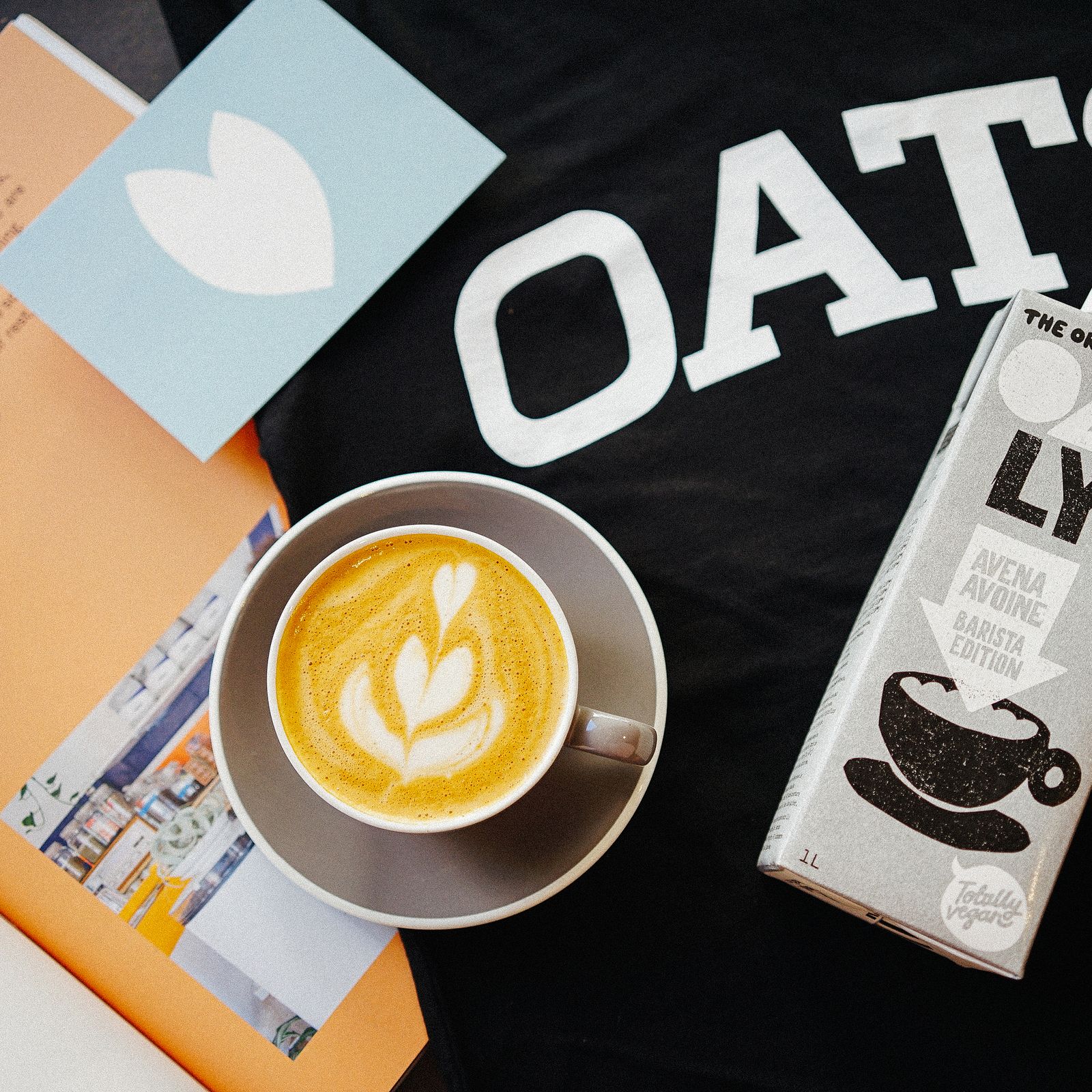
Answer: Choose a Barista-labelled oat, soy, almond, or coconut drink when you want steaming and foam. Alpro recommends different steaming temperatures by variety, while brand formulas are designed to behave differently in hot coffee. If you are buying a random café carton, ask whether it is intended for steaming and whether the barista can use a clean jug.
- Oat: usually the easiest starting point for a creamy latte profile.
- Soy: can bring more protein and a distinct flavour; it may split with acidic coffee or poor steaming.
- Almond: lighter and nutty; foam and sweetness vary widely.
- Coconut: noticeable flavour; useful when that taste fits the drink.
- Pea: can be higher-protein, but availability and flavour are less predictable in travel markets.
How should you compare nutrition?
Answer: Compare the Nutrition Facts panel per serving, not marketing words on the front. The FDA says plant-based milk alternatives vary by plant source, processing, and added ingredients, and recommends checking the label. Compare protein, calcium, vitamin D, vitamin B12 when listed, saturated fat, added sugars, and serving size for your own needs.
- Protein: useful when the drink is part of breakfast rather than only coffee.
- Calcium and vitamin D: check fortification instead of assuming every plant drink provides them.
- Vitamin B12: some products add it, but do not assume they all do.
- Added sugars: compare original, unsweetened, vanilla, and chocolate versions carefully.
- Serving size: a label comparison is meaningless if two brands use different serving volumes.
- Allergen and cross-contact wording: important when you have a medical allergy, not only a preference.
The FDA notes that fortified soy beverages are the only plant-based alternatives currently included in the dairy group of the federal Dietary Guidelines because their nutrient profile is similar enough to milk. That is not a reason every traveller should choose soy; it is a reason to read the label rather than assume oat, almond, rice, or coconut drinks are nutritionally interchangeable.
How do you check allergens?
Answer: Read the ingredients and “contains” statement on the exact carton you will drink. Oat, soy, almond, cashew, coconut, pea, rice, sesame, and other bases have different allergen implications, and manufacturing statements can vary by market. “Vegan” does not mean free from nuts, soy, gluten, or every cross-contact risk.
- Check the front, ingredients list, allergen statement, and “may contain” wording.
- Do not trust a familiar logo if the product was bought in another country.
- For coeliac disease, confirm gluten wording and the oat supply chain where relevant.
- For soy or nut allergy, avoid shared-facility assumptions unless the label is clear enough for your needs.
- Carry a translation or saved photo of the ingredients in the local language.
Use the mixed-menu ordering guide when you need to ask a café or hotel about plant milk, shared steam wands, and ingredient cross-contact.
Can you take non-dairy milk through an airport?
Answer: Airport liquid rules vary by country, airport, and security lane. A full carton counts as a liquid under many airport-security systems, but permitted amounts and exemptions vary. Do not assume you can take it through security; check the departure airport’s current rule. Buy a sealed carton after security when possible, pack a small dry or solid breakfast backup, and check the exact airport authority rules for your departure and connection airports.
- Use a shelf-stable carton after security or buy one at your destination.
- Do not open a carton in your hand luggage unless you can reseal and protect it.
- Pack oat bars, cereal, instant coffee, or another dry backup for delays.
- Allow for customs and agricultural rules when crossing borders.
- For long-haul flights, ask the airline about vegan meals but do not rely on their plant milk supply.
For U.S. departures, check the TSA liquids rule; other countries and airports can differ. For broader trip logistics, use the vegan travel apps guide and the travel-updates checklist.
How should you store non-dairy milk in hotels and rentals?
Answer: Keep unopened shelf-stable cartons at room temperature only when the package allows it. Refrigerate after opening, use the carton’s stated time window, and do not leave an opened carton in a warm room. Oatly currently says properly handled opened oat drink is approximately good for 5–7 days, but the package instructions take priority. In a rental, ask whether the fridge is working and cold before buying a large carton.
- Choose a small carton if you have no fridge or will move the next morning.
- Use a sealed bag around opened cartons to prevent leaks and odours.
- Freezing can change texture. Follow the brand’s instructions; Oatly says oat drink can be frozen, but recommends transferring it to a different freezer-safe container because the carton can be damaged.
- Label a shared fridge carton with your name and opening date.
- Ask housekeeping or hosts about fridge space rather than assuming it is available.
The hotel booking guide covers kitchens, breakfast questions, fridges, and reliable vegan stays.
What if you cannot find your usual brand?
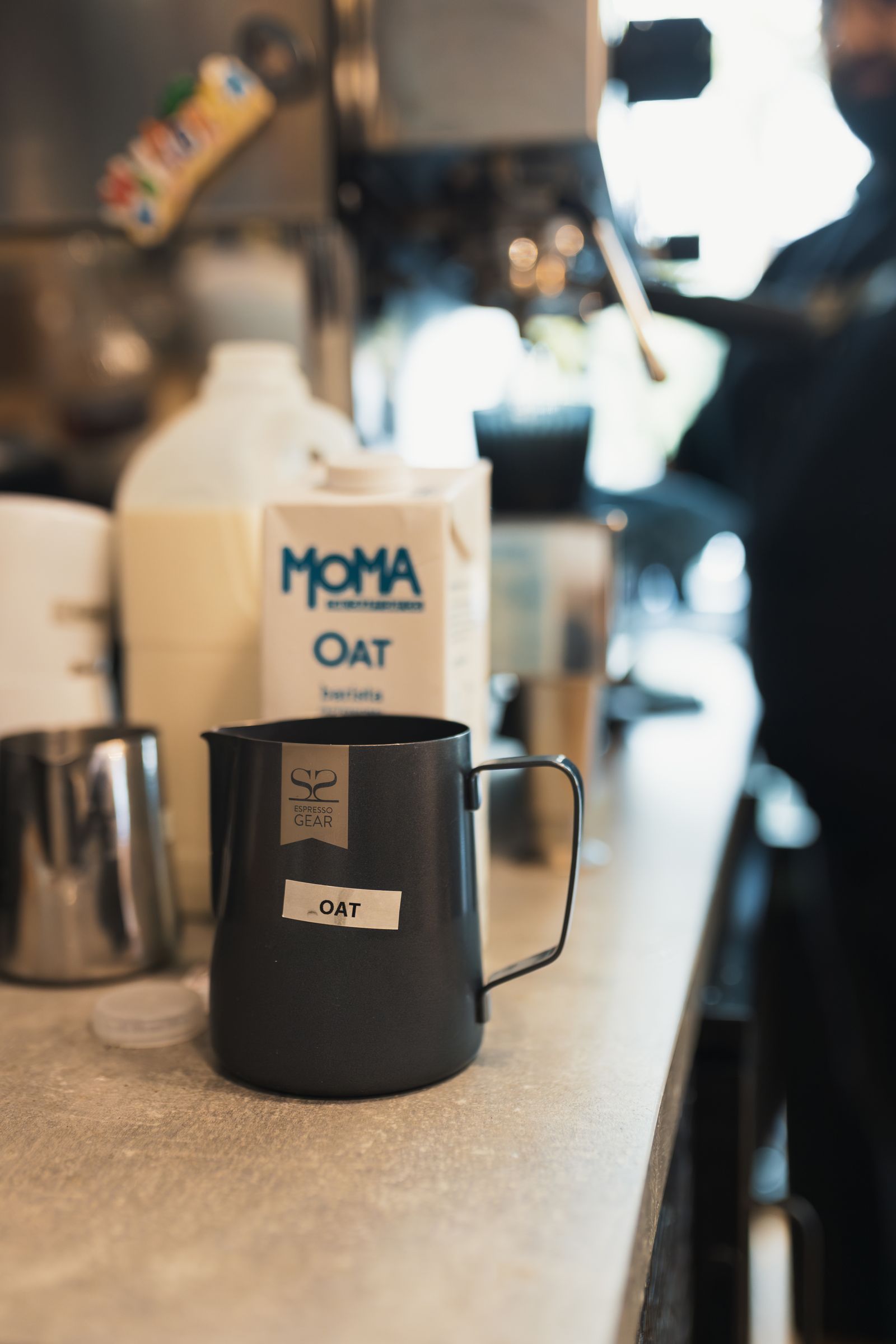
Answer: Shop by base, format, and label rather than brand loyalty. Look for “plant-based drink,” “soy drink,” “oat drink,” or the local equivalent, then compare the ingredients, fortification, sweetness, allergens, and refrigeration instructions. In many destinations, a supermarket own-label shelf-stable soy or oat drink is more useful than searching for a familiar imported carton.
Use a three-question substitution test
- Can I drink it safely? Check allergens, ingredients, and cross-contact wording.
- Can I store it? Confirm whether it is ambient or chilled before opening.
- Will I use it? Taste a small carton before buying a family-size pack for a longer stay.
Use the food-near-me guide when you need to locate supermarkets, cafés, and plant-based options while travelling.
How much non-dairy milk should you pack?
Answer: Pack enough for the first uncertain period, not the entire holiday. One small shelf-stable carton per traveller can cover an arrival breakfast or first coffee. For a rental with a kitchen, buy a larger carton locally after checking the fridge and your itinerary. Carrying too much liquid adds weight, leaks, and unnecessary waste.
| Trip shape | Practical amount | Better plan |
|---|---|---|
| One airport arrival night | One small unopened carton per person who needs it | Buy breakfast supplies after arrival |
| Hotel with breakfast | One emergency carton or none if the hotel confirms a suitable option | Verify brand, allergens, and cross-contact in advance |
| Rental kitchen for a week | Buy a large carton locally after checking fridge space | Choose a backup small carton for the first morning |
| Remote road trip | Several small shelf-stable cartons rather than one opened large carton | Protect from heat and rotate unopened stock |
The practical vegan packing guide covers food backups, containers, medication, and travel documents. For cold-weather travel, use the winter packing list.
What is the best-value non-dairy milk for travel?
Answer: The best value is usually the format that prevents an expensive failed breakfast. A shelf-stable own-label carton may beat an imported premium brand when you only need one arrival drink. A larger carton is better value only when you have refrigeration and enough meals to finish it safely.
- Compare price per litre only when carton sizes and waste are realistic.
- Do not pay a premium for Barista wording if you only need cereal or tea.
- Do not buy a large carton to save money if half will be discarded.
- Factor baggage weight, airport prices, taxi stops, and grocery delivery charges.
- Use a private kitchen or accommodation breakfast plan when it genuinely reduces food uncertainty.
What mistakes should you avoid?
Answer: The common mistakes are packing a full carton through airport security, assuming every oat drink is shelf-stable, ignoring the allergen statement, buying sweetened vanilla milk for savoury use, and carrying a large opened carton without a fridge. Read the current carton and make the format fit the trip.
- Confusing vegan with allergen-free: vegan milk can still contain soy, nuts, gluten, or cross-contact warnings.
- Assuming oat milk is nutritionally identical to soy milk: plant sources and fortification differ.
- Forgetting coffee performance: standard cartons can split or foam poorly when steamed.
- Buying before checking storage: chilled milk is not a useful airport-to-hotel backup.
- Taking liquid through security: check the exact airport rules.
- Using an old product review: formulas, pack sizes, and country availability change.
- Overpacking: one sealed backup is usually more useful than a suitcase of cartons.
Frequently asked questions
What is the best non-dairy milk for travel?
A small shelf-stable oat or soy carton is the most flexible starting point. Choose soy when protein or fortified nutrition matters, oat when coffee texture matters, and another base when allergy or taste needs point elsewhere.
Which non-dairy milk does not need refrigeration?
Shelf-stable cartons do not need refrigeration before opening when the package says so. Silk explicitly describes its shelf-stable soy and oat drinks this way; follow the exact storage directions on your carton.
Is Oatly shelf-stable?
Some Oatly products are shelf-stable and some are chilled. Oatly says unopened shelf-stable oat drink can stay at room temperature for almost a year, but check the product and market-specific package.
Is soy milk better than oat milk for travel?
Neither is universally better. Fortified soy can be useful for protein and nutrient similarity to milk, while oat is often preferred for coffee taste and texture. Compare the actual label.
What non-dairy milk is best for coffee?
Choose a Barista-labelled oat, soy, almond, or coconut drink. The best choice depends on the coffee, steaming method, sweetness, and current local product.
Can vegans take milk alternatives on a plane?
Airport security rules treat liquids differently by location and quantity. A full carton is generally not a reliable carry-on plan. Buy after security or at your destination and carry a dry breakfast backup.
Does plant-based milk contain protein?
Some does, especially soy and pea drinks, while almond, rice, coconut, and some oat drinks may contain less. Compare grams per serving on the current Nutrition Facts label.
Which milk alternative is best for nut allergies?
Oat, soy, or pea may be options, but do not assume they are nut-free. Read the exact allergen statement and manufacturing warning for the product and country.
Can you pack non-dairy milk for a road trip?
Yes. Choose unopened shelf-stable cartons, protect them from heat, and refrigerate after opening. Small cartons reduce waste when you do not have a cooler.
How long does shelf-stable oat milk last?
It varies by brand and package. Oatly says unopened shelf-stable oat drink can stay at room temperature for almost a year, but use the best-before date and storage instructions on your carton.
What should vegans ask a hotel about milk?
Ask which brand and base they use, whether it is vegan, whether it is kept separate from dairy, whether a clean steam wand is available, and whether an unopened carton can be provided.
Final summary and key takeaways
The best non-dairy milk for travel is a logistics choice as much as a taste choice. Start with a small shelf-stable carton, compare protein and fortification on the label, check allergens, and choose Barista products when coffee is central. Buy larger chilled cartons only when your accommodation and itinerary support them.
- Choose shelf-stable for arrival-day certainty.
- Choose soy or pea when protein is a priority and the label fits your needs.
- Choose Barista oat, soy, almond, or coconut for steaming and coffee.
- Never assume vegan means allergen-free.
- Read the current ingredients, storage, and Nutrition Facts panel.
- Buy locally when possible instead of carrying liquid through security.
- Pack one sealed backup, not an entire holiday’s supply.
Use the vegan food guides hub to plan the rest of your trip and check the Kaua’i vegan food guide when you need destination-specific food planning.
Sources and Verification
Checked 25 October 2026. Product formulas, pack sizes, availability, prices, storage instructions, and airport rules can change. Check the exact package and departure airport before travel.
- Silk: Shelf-Stable Original Soymilk for pantry storage, protein, ingredients, and soy allergen information.
- Silk: Shelf-Stable Original Oatmilk for shelf-stable oat storage and current ingredients.
- Oatly: Does Oat Drink Go Bad? for unopened shelf-stable storage guidance.
- Oatly US: Oatmilk range for current Barista and other product formats.
- Alpro: Barista Collection for coffee-use temperatures and current oat, soy, almond, and coconut range information.
- FDA: Plant-Based Milk and Animal Food Alternatives for variation by plant source and processing.
- FDA: Know the Nutrient Difference for comparing Nutrition Facts labels and fortified soy guidance.
- FDA: Using the Nutrition Facts Label for current label-comparison guidance.
- TSA: Liquids, Aerosols, and Gels Rule for U.S. carry-on liquid limits; check the departure and connection airports for other rules.
Next step: choose the milk format before you pack: one small shelf-stable backup for transit, or a larger local carton only after confirming storage and use.