What to Pack for a Winter Vacation: Vegan Packing List
Short answer: Pack a winter holiday in layers, not one giant coat. Your core kit is a moisture-wicking base, insulating middle layer, weatherproof outer layer, warm accessories, grippy footwear, and a carry-on backup with medication, documents, food, and batteries. Match the list to wet cold, dry cold, snow, city walking, or a winter road trip.
Updated 25 October 2026. Winter weather, airline baggage rules, border restrictions, and destination requirements can change, so check current guidance before departure. Featured photo: Nurunnur via Pexels.
What you’ll find in this guide
Use the section that matches your trip, then return to the final checklist before you leave:
Plan from the real forecast, build a three-layer system, protect your cabin bag, choose footwear and traction, carry a vegan food buffer, check airport and airline rules, protect medication and health, keep batteries usable, adapt the list to your trip type, prepare for winter driving, and run a final check.
Set up offline apps
Check accommodation
Check travel updates
Compare carry-ons
City break
Prioritise one warm, grippy walking pair, a compact mid-layer, indoor-friendly clothes, and a small food backup for delayed transfers.
Snow or long outdoor days
Add weatherproof trousers, traction, spare dry socks, face and hand protection, and a way to keep electronics warm and dry.
Road trip or remote stay
Carry route redundancy, blankets, water, shelf-stable vegan food, a torch, medication, and a charged power backup.
Winter travel is harder on luggage and plans than warm-weather travel. Bulky clothing consumes space, wet gear needs somewhere to dry, daylight may be shorter, and delays can leave you standing outside or waiting in an unheated terminal. A vegan winter packing list should solve those practical problems without assuming that every destination has the same cold, snow, shops, or vegan food.
How should you plan a winter packing list?
Answer: Start with the forecast’s lowest feels-like temperature, precipitation, wind, walking time, and access to laundry. Then decide whether the trip is mainly indoors, outdoors, or in transit. Pack for the coldest realistic block of time, not the average temperature, and keep one complete warm outfit in your cabin bag in case checked luggage is delayed.
The five winter questions
- Is the cold dry, wet, windy, or snowy? Dry cold needs insulation; wet cold needs waterproofing and spare socks; wind increases heat loss; snow needs traction.
- How long will you be outside at once? A museum city break and a ski transfer need very different outerwear.
- Will you carry luggage over ice, stairs, or cobbles? Choose manageable bags and footwear with grip.
- Can you dry clothes? A heated room, laundry facility, or apartment changes how many socks and base layers you need.
- What is hard to replace? Vegan boots, specialist medication, gloves, and allergy-safe food may be harder to find than ordinary toiletries.

What are the three winter clothing layers?
Answer: The three-layer system is a breathable base layer, an insulating mid layer, and a weatherproof outer layer. It lets you adjust to a heated train, a windy platform, a snowy walk, or a restaurant without carrying multiple bulky outfits. Vegan travellers can use synthetic, recycled, plant-based, or other non-animal fibres that suit the temperature and activity.
| Layer | What it does | What to pack |
|---|---|---|
| Base | Moves moisture away from skin and controls comfort indoors | Synthetic or plant-based thermal top, leggings, underwear, socks |
| Middle | Traps warm air and can be removed inside | Fleece, insulated vest, recycled-fibre jumper, or light puffer |
| Outer | Blocks wind, rain, and snow | Waterproof or water-resistant shell, insulated coat, or snow jacket |
| Emergency layer | Protects you if luggage or transport fails | Packable warm layer, hat, gloves, dry socks, and emergency blanket if relevant |
Avoid relying on one huge coat for every temperature. A layered system is easier to compress, repair, dry, and adapt. If you need animal-free materials, check insulation, trims, adhesives, and waterproofing claims rather than assuming a garment is vegan from its headline.
What should go in your winter cabin bag?
Answer: Your cabin bag should keep you functional for the first night and the first delayed connection. Put documents, medication, valuables, power banks, a complete warm layer, one change of clothes, dry socks, gloves, a food backup, and essential toiletries where you can reach them. Winter coats can be worn through the airport, but do not bury gloves in checked luggage.
| Cabin-bag group | Winter essentials | Why it matters |
|---|---|---|
| Documents and money | Passport, visas, insurance, cards, cash, addresses | Cold delays are harder when you cannot check in or pay |
| Health | Medication, prescriptions, glasses, lip balm, personal supplies | Replacement may be difficult and cold can worsen discomfort |
| Warmth | Base layer, fleece, hat, gloves, dry socks | Protects you if luggage or heating fails |
| Food | Solid snacks, dietary card, reusable cutlery if useful | Covers delays and limited vegan options after arrival |
| Technology | Phone, charger, power bank, offline maps, tickets | Cold and delays can drain batteries and disrupt plans |
Airline cabin dimensions and weight limits vary. Use the carry-on luggage guide for bag features, then confirm the current allowance with your airline before leaving.
What footwear works for winter travel?
Answer: Choose one primary pair that is warm, comfortable, water-resistant, and grippy enough for the actual surface. Add a lighter indoor or evening pair only if the itinerary genuinely needs it. Wet shoes can make a whole trip miserable, so footwear deserves more planning than an extra jumper.
- City walking: insulated, water-resistant boots or shoes with a non-slip sole.
- Snow and ice: deeper tread, stable ankle support, and room for warm socks.
- Rainy winter: waterproof upper and a drying plan; avoid shoes that stay wet overnight.
- Formal evenings: a compact pair only when dress codes or work require it.
- Indoor accommodation: lightweight slippers or grippy socks when floors are cold.
Break in boots before departure. Pack blister care, spare socks, and a thin shoe bag. If you use traction aids or crampons, verify the walking surface and airline packing rules before placing them in a bag.

Which winter accessories matter most?
Answer: The highest-value accessories protect the places where heat escapes and the parts of your body that become uncomfortable first: head, hands, neck, and feet. Choose compact, washable pieces you can keep in a coat pocket. A spare glove pair and dry socks often help more than a second bulky top.
- Warm hat or beanie that covers the ears.
- Water-resistant gloves or mittens, plus thin liner gloves for phone use.
- Scarf, neck warmer, or buff that blocks wind.
- Warm socks, with one spare pair in the day bag.
- Sunglasses or snow glare protection.
- Hand warmers if useful and permitted for your transport route.
- Reflective or visible detail for dark walks and roadside stops.
- Small daypack with a rain cover or dry bag liner.
Keep one pair of gloves and your hat in the personal item. If you remove them at security or in a café, use a dedicated pocket rather than balancing them on luggage.
How do you pack for wet cold and snow?
Answer: Wet cold needs a waterproofing and drying strategy, not just thicker clothing. Separate wet and dry items, protect electronics, and make it easy to hang or spread gear in your accommodation. Ready.gov warns that winter travel has unique risks and recommends checking forecasts, warnings, traffic, and road conditions before setting out.
- Use a waterproof outer shell or poncho rather than relying on a fashion coat’s water resistance.
- Pack a lightweight dry bag or plastic-free leakproof liner for wet gloves and socks.
- Carry a compact umbrella only when wind and local rules make it practical.
- Protect passports, electronics, medication, and food from melted snow.
- Pack a microfibre cloth for glasses, phone screens, and wet surfaces.
- Do not dry technical clothing directly on a radiator unless the garment instructions allow it.
- Leave a small margin in the suitcase so wet gear can be isolated from dry clothing.
What vegan food should you pack for a winter vacation?
Answer: Pack enough sealed, shelf-stable vegan food for the journey, a delay, and the first practical meal after arrival. Winter trips can involve long transfers, closed cafés, early sunsets, and remote accommodation. Choose solid foods that tolerate cold, do not leak, and are legal to carry across your route.
Cold-weather vegan food backup
- Oat or cereal bars, crackers, roasted chickpeas, nuts, seeds, and dried fruit.
- Instant oats or soup only when you have hot water and import rules allow them.
- Tea, coffee, electrolyte sachets, or drink powders in labelled packaging.
- Small packets of nut butter or hummus only where liquid and gel rules permit.
- A sturdy reusable container and cutlery if you will actually use them.
- One meal-sized backup for a late arrival, not a suitcase full of groceries.
Vegan food after arrival
Ask your hotel or host about a heated kitchen, refrigerator, grocery delivery, supermarket distance, breakfast ingredients, and late check-in. Plant milk, bread, tofu, soup, fruit, and ready meals are easier to source after arrival when you know the local rules. The hotel booking guide helps you check those facilities before booking. Browse the wider vegan food guides hub when you are researching a destination.
Winter restaurant communication
Save a dietary message explaining that you eat vegan and avoid meat, fish, seafood, egg, dairy, honey, animal stock, fish sauce, oyster sauce, and shared preparation when necessary. The mixed-menu restaurant guide gives you a practical question sequence.
What are the airport rules for liquids, food, and batteries?
Answer: Check your departure and transit airports because rules vary. For U.S. TSA screening, carry-on liquids, aerosols, gels, creams, and pastes are generally limited to 100 ml containers in a quart-sized bag. TSA distinguishes solid food from liquid or gel food. The FAA says spare lithium batteries and power banks belong in carry-on baggage, while airlines may impose stricter watt-hour or quantity limits.
| Item | Pack it how? | Winter-specific check |
|---|---|---|
| Solid snacks | Sealed and accessible in your cabin bag | Protect from melted snow and destination customs rules |
| Soup, hummus, sauces | Treat as liquid or gel; buy after security when possible | Leak protection and 100 ml airport limit |
| Power bank | Carry-on only, terminals protected | Cold drains batteries; keep it insulated but not overheated |
| Spare lithium batteries | Carry-on only, individually protected | Check airline Wh and quantity limits |
| Ice traction aids | Pack according to the airline’s sharp-object and sports-equipment rules | Protect points and check whether they must be checked |
IATA notes that many countries use 100 ml liquid limits and that airline allowances vary by carrier, cabin, and aircraft. Do not rely on a rule remembered from a previous winter. Check the airline, departure airport, transit airport, and destination customs page.
What medication and cold-weather health items should you pack?
Answer: Keep essential medication in your cabin bag in original labelled packaging, with prescriptions or a clinician’s letter where needed. The CDC recommends a destination-specific travel health kit, copies of prescriptions and insurance documents, and checking country restrictions. Winter adds practical needs such as lip care, skin protection, dry-eye supplies, and medication that must not freeze.
- Prescription medication plus a delay buffer approved by your clinician.
- Original labels, generic names, dosage, prescriptions, and medical letters.
- Glasses, contact lenses, hearing aids, and chargers or batteries for medical devices.
- Lip balm, moisturiser, sunscreen, and eye drops for dry or windy conditions.
- Basic first aid, pain relief, personal allergy medication, and motion-sickness support as appropriate.
- Hand sanitiser, tissues, masks if useful, and insect repellent where relevant.
- Emergency contacts, travel insurance, and nearby clinic information.
Check storage instructions before exposing medication to a freezing car boot, outdoor excursion, or unheated luggage hold. Ask a pharmacist or clinician about medicines that are temperature-sensitive.
How should you protect technology and power in winter?
Answer: Keep electronics and power banks in your cabin bag and protect them from condensation, snow, and extreme cold. Cold can shorten battery life temporarily, so carry a power bank within airline rules and warm devices gradually before charging if they have been outside in freezing conditions.
- Phone with offline maps, tickets, translation, accommodation details, and emergency contacts.
- Power bank in carry-on baggage, with its watt-hour rating visible.
- Chargers and destination adapter in a small, labelled pouch.
- Waterproof or sealable protection for phone and camera during snow or rain.
- Headlamp or small light for dark arrivals, rural stays, or roadside stops.
- Downloaded entertainment for delays and a paper backup of key addresses.
- Camera batteries kept warm in an inner pocket when appropriate.
The travel apps guide covers maps, food research, translation, and offline planning. For longer flights, the TRTL travel pillow review can help you decide whether another comfort item earns its space.
How should you pack for different winter trip types?
Answer: Keep the core layers, then add equipment for the surface and schedule. A city break needs weatherproof walking and easy indoor transitions; a ski or snow trip needs specialist gear; a winter festival needs warmth for long standing; and a remote cabin needs more food, power, and emergency redundancy.
| Winter trip | Add | Main risk to plan for |
|---|---|---|
| Cold city break | Water-resistant boots, layers, daypack, umbrella or shell | Long walking days, wet feet, heated interiors |
| Snow or ski trip | Technical base layers, goggles, traction, activity-specific gear | Inadequate waterproofing, sun glare, specialist hire rules |
| Winter festival or market | Hand warmers, thermos plan, portable food, visible outer layer | Standing still outdoors and limited vegan options |
| Winter road trip | Blanket, water, snacks, power, first aid, route backup | Road closures, breakdowns, low visibility, cold exposure |
| Remote cabin | Shelf-stable food, headlamp, offline maps, extra layers | Limited shops, power cuts, delayed transport |
| Warm winter escape | Light layers, rain shell, one warm transit layer | Overpacking a heavy coat you will not use |
Do not pack ski, climbing, or traction equipment by assumption. Check whether the airline, tour operator, accommodation, or local hire shop supplies it. Specialist gear can add cost and baggage risk without improving the trip.
What should you pack for winter road trips and remote stays?
Answer: A winter road trip needs an emergency buffer in addition to ordinary luggage. Ready.gov recommends checking forecasts, warnings, traffic, and road conditions, telling someone your route and arrival time, and carrying a vehicle emergency kit with blankets, food, water, and first aid. Follow the local authority’s advice when roads are poor.
- Warm blanket, spare hat and gloves, dry socks, and a high-visibility layer.
- Water and shelf-stable vegan food that can be eaten without cooking.
- Charged phone, car charger, power bank, and offline route.
- First-aid kit, medication, torch or headlamp, and basic hygiene.
- Paper route and accommodation details in case signal disappears.
- Ice scraper, de-icer, and local vehicle equipment when hiring or driving.
- Extra time and a cancellation option for weather-related changes.
If a road is closed or conditions are unsafe, postpone non-essential travel rather than treating the packing list as permission to continue.
How do you manage drying, laundry, and suitcase organisation?
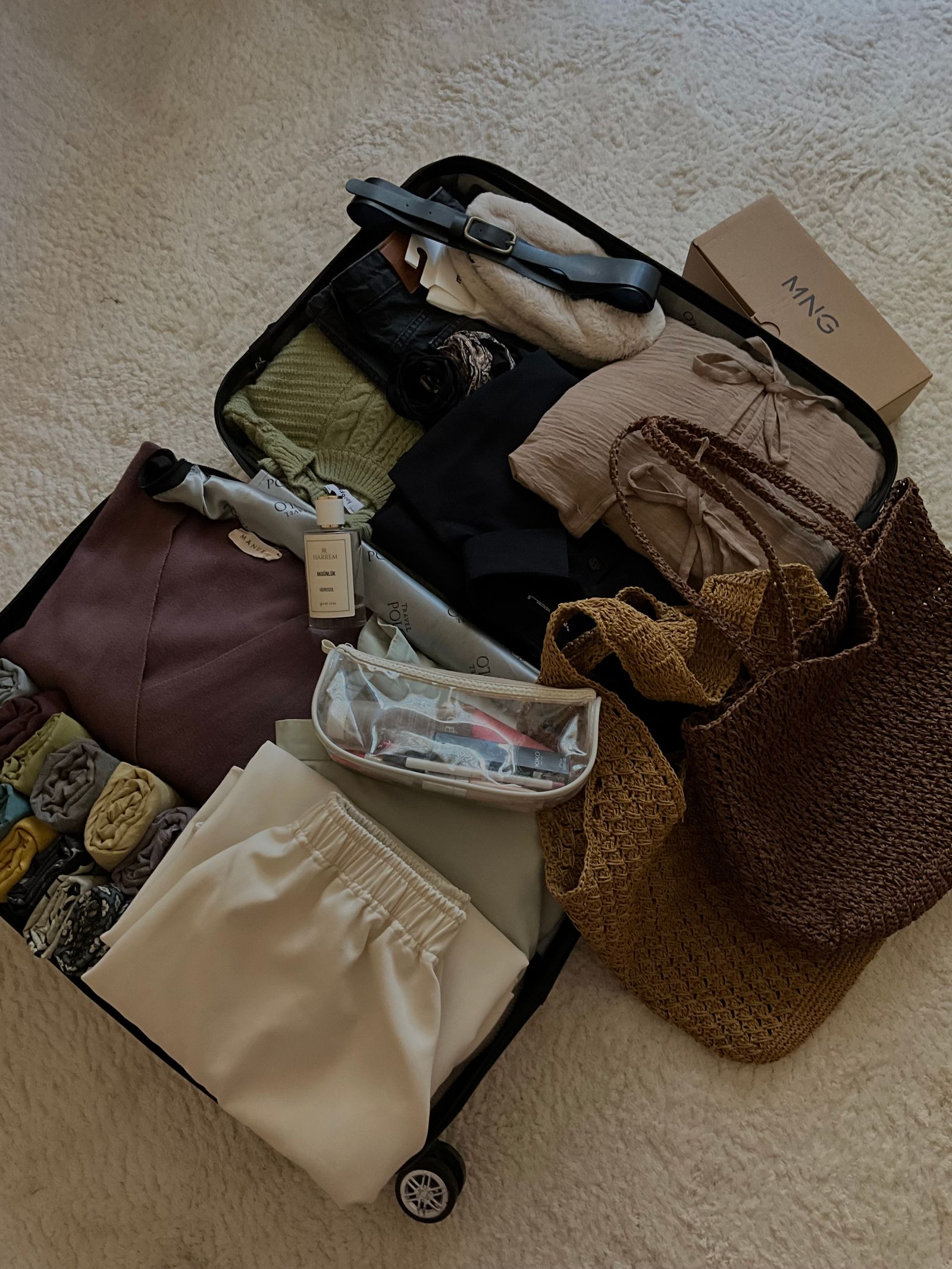
Answer: Pack fewer bulky items and plan how wet clothing will dry. Use packing cubes or separate bags by layer, not by outfit, so you can reach socks, base layers, and gloves without emptying the whole suitcase. A laundry plan often saves more space than another sweater.
- Pack a small laundry bag for damp or worn base layers.
- Carry quick-dry base layers and socks rather than multiple heavy cotton items.
- Use a shoe bag and keep wet footwear separate from clothing.
- Ask accommodation about a dryer, heated rail, laundry room, and drying restrictions.
- Leave a little room for damp gear on the return journey.
- Put the next morning’s base layer and socks where you can reach them at night.

What are the most common winter packing mistakes?
Answer: The biggest mistakes are packing for an average temperature, carrying one bulky layer instead of an adaptable system, and forgetting the practical consequences of wetness, darkness, delays, and limited shops. Winter packing should be conservative about warmth and selective about volume.
- Using the average temperature: check the lowest feels-like temperature, wind, rain, and the hours you will be outside.
- Packing cotton as the main base layer: it can stay damp and uncomfortable in cold conditions.
- Taking fashionable shoes without grip: ice and wet cobbles punish optimistic footwear.
- Leaving gloves in checked luggage: a cold airport transfer becomes miserable quickly.
- Putting medication or power banks in the hold: keep essential and battery items with you.
- Assuming a remote destination has vegan food: arrange groceries and carry a sealed backup.
- Forgetting condensation: protect electronics and let cold devices warm gradually.
- Planning a tight winter connection: leave time for de-icing, snow, traffic, and road closures.
- Packing too many heavy items: build a three-layer system and use laundry instead.
What should you check before leaving?
Answer: Finish with a short verification rather than adding more gear. Confirm the actual forecast, route warnings, airline baggage allowance, food and customs rules, accommodation drying options, and medication storage. Then put your emergency layer and first meal in the bag you will carry.
- Passport, visa, insurance, tickets, addresses, and emergency contacts are available offline.
- Medication, prescriptions, glasses, medical devices, and a delay buffer are in the cabin bag.
- One warm base layer, mid layer, hat, gloves, and dry socks are accessible.
- Footwear is broken in, grippy, weather-appropriate, and packed with blister care.
- Food is sealed, solid where possible, and legal for the route and destination.
- Liquids fit the departure and transit airport rules.
- Power bank and spare batteries are in carry-on baggage and within airline limits.
- Phone, chargers, offline maps, tickets, and accommodation details work without signal.
- Wet gear has a drying or separation plan.
- Forecast, warnings, traffic, and road conditions have been checked for the actual journey.
- Bag weight and dimensions match the current airline allowance.
Frequently asked questions
How many layers should I pack for a winter vacation?
Use one breathable base, one insulating middle layer, and one weatherproof outer layer as your core system. Add a spare base and socks rather than several bulky coats.
What is the warmest vegan material for winter travel?
No single material is warmest in every use. Synthetic insulation, fleece, plant-based fibres, and technical shells can all work when matched to moisture, wind, activity, and the garment’s construction.
Do I need snow boots for a city break?
Only if the forecast, surface, and walking plan justify them. A warm, water-resistant boot with good grip is often more useful than a specialist snow boot in a mostly urban itinerary.
Can I bring vegan food through airport security?
Solid snacks are generally easier than liquid or gel foods, but security and customs rules vary. Check the complete route and declare food when required.
Can I bring soup or hummus on a plane?
They can be treated as liquids or gels. In U.S. TSA screening, ordinary carry-on containers are generally limited to 100 ml; buy larger portions after security when possible.
Where should I pack a power bank in winter?
In your cabin bag, never checked luggage. Keep it protected from snow and extreme cold, and check the watt-hour and airline limits.
How do I keep medication safe in freezing weather?
Follow the medicine’s storage instructions, keep essential medication with you, and ask a pharmacist or clinician about temperature-sensitive items. Do not leave medication in a freezing car boot.
What should I pack for a winter road trip?
Carry warm layers, blankets, water, solid vegan food, first aid, medication, a torch, power, offline maps, and a route backup. Check warnings and road conditions before departure.
How do I dry wet winter clothes while travelling?
Separate wet gear, use quick-dry layers, ask about laundry and heated rails, and avoid overheating technical clothing. Pack a small laundry or waterproof bag.
Should I pack a thermos?
It can be useful for a road trip or long outdoor day, but take it empty through airport security and fill it after screening. Confirm venue and transport rules.
How can I avoid overpacking winter clothing?
Use a three-layer system, limit shoes, choose a coordinated capsule, and plan one laundry cycle. Wear your bulkiest coat and boots in transit.
Final summary and key takeaways
A vegan winter vacation packing list should protect you from cold, wetness, delays, limited food access, and battery or medication problems without filling the suitcase with duplicate gear. Build around layers, grippy footwear, accessible warmth, legal food backups, and the actual trip type.
- Pack for feels-like temperature, wind, rain, snow, and time outdoors.
- Use a breathable base, insulating middle, and weatherproof outer layer.
- Keep gloves, dry socks, medication, food, documents, and power banks in your cabin bag.
- Check liquids, food, batteries, customs, and airline rules for the full route.
- Plan drying, laundry, and wet-gear separation before you leave.
- For road trips and remote stays, carry food, water, warmth, power, and route redundancy.
- Verify forecasts and warnings shortly before departure.
Use the broader practical vegan packing guide for non-winter basics, then return to this page for cold-weather decisions.
Sources and Verification
Checked 25 October 2026. Winter warnings, road conditions, airline allowances, airport screening, battery limits, medication restrictions, and destination services can change. Verify the exact dates, route, carrier, and destination before departure.
- Ready.gov Winter Ready for winter travel risks, forecasts, road conditions, route sharing, and emergency kits.
- TSA Liquids, Aerosols, and Gels Rule for U.S. carry-on liquid limits.
- TSA Food guidance for solid food and liquid or gel food screening.
- FAA PackSafe lithium-battery guidance for power banks and spare batteries.
- IATA passenger baggage rules for airline variation, batteries, liquids, and special-dietary items.
- CDC Pack Smart for destination-specific travel health kits and documents.
- CDC Traveling Abroad with Medicine for medication packaging and country restrictions.
Before departure, use the travel updates checklist and the printable vegan packing list to verify the route and tick off the basics.
Next step: check the actual feels-like forecast and route warnings, then pack your warmest essential layer where you can reach it.