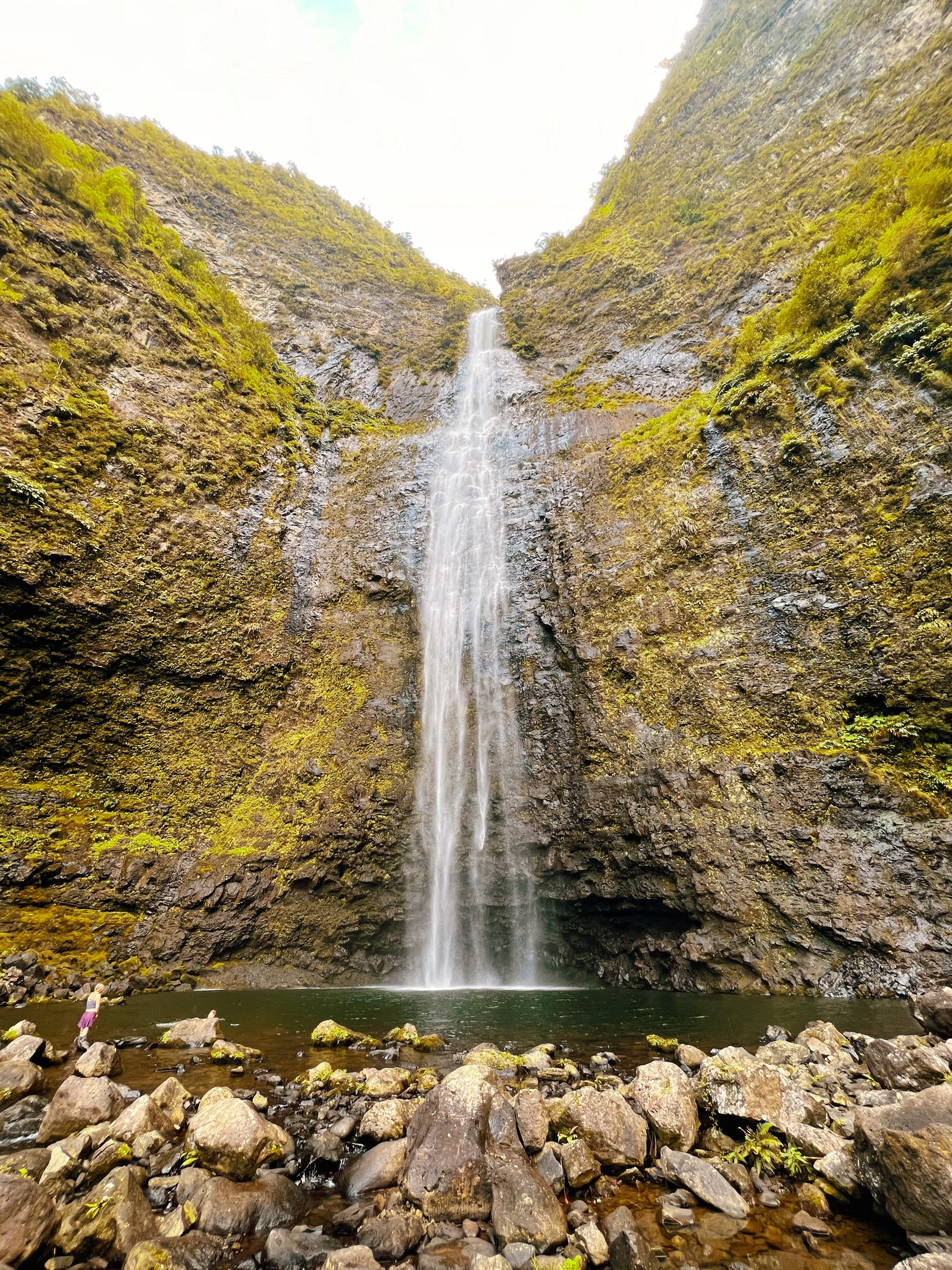
Hoopii Falls Kauai Guide: A Vegan-Friendly Nature Trip
Short answer: Ho’opi’i Falls is not a straightforward public park with a normal trailhead. Access, parking, land parcels, maintenance, and local tolerance have become contested. Current reporting confirms serious residential-road parking problems and confusion around state, leased, and private land. If signs, barriers, resident instructions, or official notices say not to enter, do not proceed. Choose a signed public waterfall viewpoint instead.
Updated 25 October 2026. Trail access, weather, stream levels, road conditions, safety guidance, and nearby food options can change, so check current local information before travelling. Featured photo: Allie Feeley via Pexels.
Ho’opi’i Falls can be beautiful, but the responsible travel question is not simply “how do I find the trail?” It is “is access clearly lawful and safe on my date?” The route near Kapahi Road is muddy, poorly signed, close to homes and farms, and exposed to flash-flood and freshwater-health risks. Treat this guide as a verification and decision guide, not as encouragement to trespass or park on a residential road.
What you’ll find in this guide
Start with the access decision, not the waterfall photo:
Check whether access is actually clear, decide if this stop fits your group, avoid unsafe or disputed parking, understand the informal route, skip swimming and jumping, check rain and flood risk, protect your vegan meal plan, compare signed waterfall alternatives, and run the final mistake check.
Access is the first decision
A visible path or map pin is not proof of permission. Treat signs, barriers, resident instructions, land boundaries, and current notices as decision points.
Have a signed alternative ready
ʻŌpaekaʻa Falls and Wailua Falls are better fallback choices when weather, mobility, parking, or local access makes this informal route a poor fit.
Plan food before the mud
Kapaʻa is your practical food base. Check Vegetate808’s current details, carry a sealed vegan backup, and do not expect food, water, bins, or toilets at the falls.
Is Ho’opi’i Falls open and public?
Answer: The current answer is qualified: public access has existed through a state permit arrangement, but the route crosses or borders state-owned, state-leased, and private or kuleana land, and there is no simple visitor-centre system confirming daily access. A 2025 Kaua’i Now report described ongoing resident complaints, unclear maintenance responsibility, and safety concerns. Recheck current official and local notices before travelling.
Do not rely on an old blog, map pin, or trail-app sentence that says “open year-round.” A trail can be physically visible while a particular approach, parcel, crossing, or parking practice is not permitted. Current AllTrails guidance also warns that portions are privately owned and that there is no formal state oversight, signage, or maintenance.
| What you find on arrival | What it means | Your decision |
|---|---|---|
| Clear current permission and open route | Access appears lawful and the route is not closed | Stay on the permitted path and follow every sign |
| No-parking, no-trespassing, barrier, or closure sign | Your planned approach is not acceptable | Turn around; do not search for a side route |
| Conflicting signs or unclear land boundary | You cannot confidently establish permission | Do not enter; choose a signed alternative |
| Heavy rain, swollen stream, or brown water | Flood and freshwater-health risk is elevated | Cancel the falls visit |
Should you visit Ho’opi’i Falls on this trip?
Answer: Visit only if you can verify current access, park legally without burdening residents, and accept a muddy, unmaintained route with no guaranteed facilities. Skip it if you need a predictable family walk, wheelchair access, a marked trail, a safe swimming hole, or a reliable public car park.
Good reasons to consider it
- You have current permission or authoritative confirmation that the route is open.
- You can arrive without blocking Kapahi Road or entering a signed private area.
- Your group is comfortable with mud, roots, mosquitoes, stream-edge terrain, and route-finding.
- You are happy to admire the falls without jumping or swimming.
Reasons to choose another stop
- You cannot resolve conflicting access and parking information.
- There has been heavy rain, a flash-flood watch, or a brown-water advisory.
- You are travelling with children who may run toward water or cliffs.
- You need a signed, maintained, roadside, or accessible viewpoint.
- You are tempted to follow a social trail around a barrier or private-property sign.
Where should you park for Ho’opi’i Falls?
Answer: Do not park on Kapahi Road unless current, lawful signage explicitly permits it. Residents and local reporting describe blocked driveways, compromised emergency access, traffic, and conflict. Some trail listings point visitors toward Kapahi Park, but local reporting also questions whether that residential park is an appropriate overflow facility. Verify current county signage and restrictions on your date rather than treating Kapahi Park as a guaranteed falls car park.
- Never block a driveway, mailbox, turning area, farm entrance, or emergency route.
- Do not create a new shoulder or verge space by driving over vegetation.
- Do not pay an unverified person for roadside parking without clear permission and a receipt.
- Do not leave valuables in a remote-looking car and do not leave food that attracts animals.
- If the only practical way to visit involves illegal or disputed parking, do not visit.
The most respectful answer may be to leave the area and visit a managed viewpoint. A waterfall is not worth creating a safety problem for residents or emergency services.
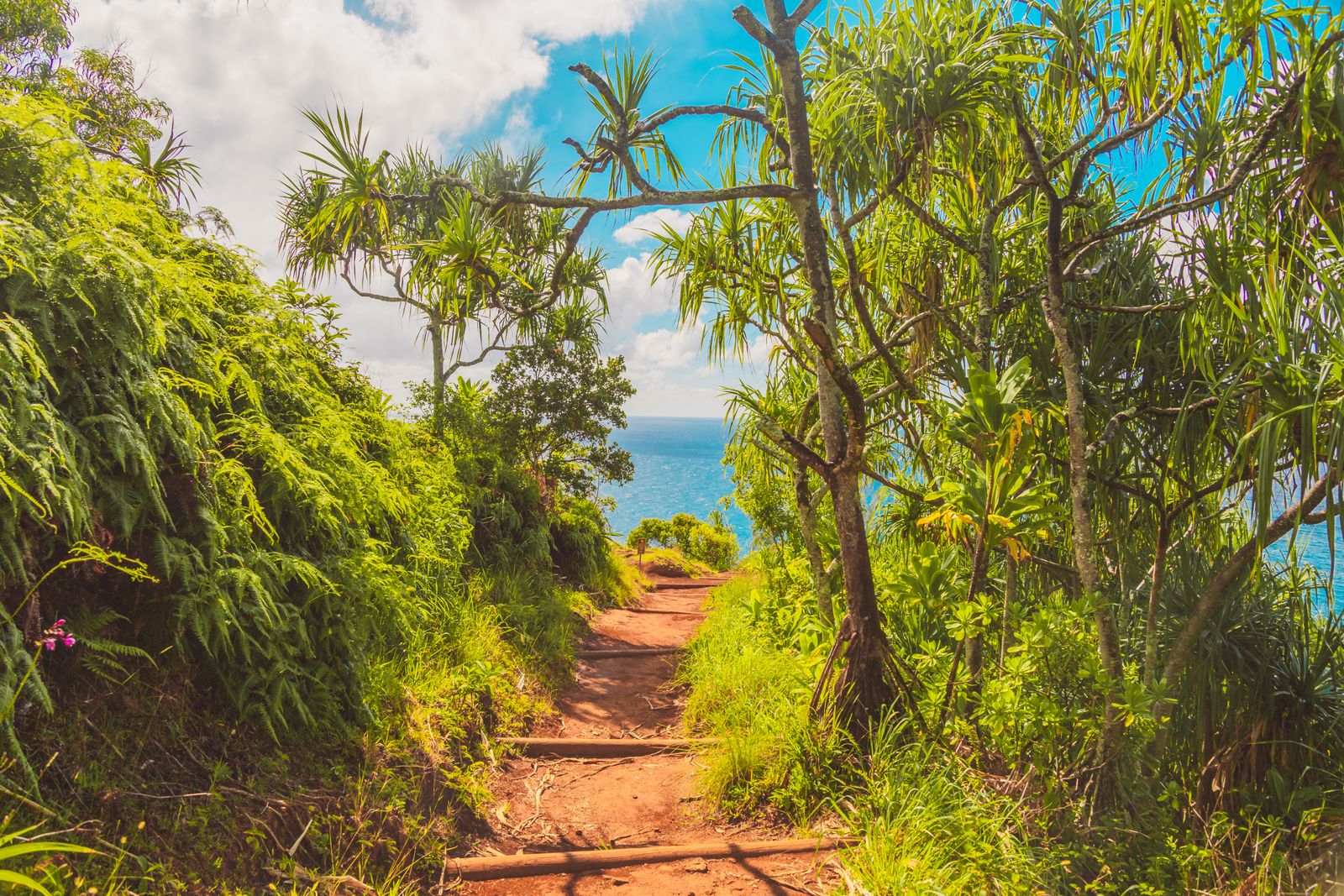
What is the Ho’opi’i Falls route like?
Answer: Reports describe a short roughly 2.5-mile round trip with about 1–2 hours of walking plus viewing time, but conditions and route lines vary. Expect mud, roots, mosquitoes, social trails, stream-edge sections, and a steep or slippery approach near the lower falls. Those figures are informal trail-guide estimates, not a maintained official trail standard.
| Section | What to expect | Practical response |
|---|---|---|
| Residential approach | Homes, narrow road, limited or disputed parking | Keep noise down and obey every sign; do not congregate |
| Upper falls area | Streamside terrain, rocks, tropical vegetation, slippery surfaces | Use grip footwear and do not climb or jump |
| Between the falls | Roots, mud, side paths, route-finding, insects | Stay on the clearly permitted path; turn back if unclear |
| Lower falls approach | Steeper, slippery, less formal terrain | Do not continue if weather, water, or access is uncertain |
Download maps before leaving reception, but do not let a GPX track override a physical closure or a resident instruction. Route-finding confidence is not permission.
Can you swim at Ho’opi’i Falls?
Answer: Swimming and jumping should not be part of a responsible Ho’opi’i Falls plan. Hawai’i’s Department of Health advises avoiding freshwater streams and ponds because contaminated water can transmit leptospirosis, especially through cuts, eyes, nose, or mouth. Rocks, submerged obstacles, changing flow, and previous injuries add further risk.
- Do not jump from a waterfall, ledge, tree, or lava shelf.
- Do not put your head under freshwater or drink stream water.
- Cover cuts and do not enter water with open wounds.
- Leave immediately if water turns brown, rises, or carries debris.
- Keep dogs out of questionable freshwater and follow local rules.
- If you develop fever, headache, muscle aches, vomiting, or other illness after freshwater exposure, tell a clinician about the exposure promptly.
The Hawai’i Department of Health’s guidance is more reliable than a photo caption or a visitor review. A “clear pool” is not a water-quality test.
How do rain and flash floods affect the hike?
Answer: Rain can turn a short jungle route into a flood and slip hazard quickly. Never cross a flooded stream, and do not start when a flash-flood warning, heavy-rain event, or rapidly rising water is affecting Kaua’i. County warnings emphasize that streams and outdoor areas can become hazardous during heavy rain.
- Check the National Weather Service forecast and Kaua’i County alerts shortly before leaving.
- Look at upstream weather, not only sunshine at your accommodation.
- Cancel after heavy overnight rain even if the trailhead looks dry.
- Do not use a rope, branch, or human chain to cross moving water.
- Do not wait beside a stream for water to “probably” drop.
- Build a weather backup into the day before driving to Kapahi.
For broader trip checks, use the travel-updates checklist and verify current road and weather notices before departure.
Where can vegans eat near Kapa’a?
Answer: Kapa’a is the practical food base for a Ho’opi’i Falls day. Vegetate808 describes itself as a plant-based restaurant in Kapa’a using locally sourced, organic ingredients. Kaua’i also has juice bars, markets, food trucks, and farmers markets, but hours and stalls change. Eat before the walk or pack a sealed meal; do not assume a remote waterfall route has food, water, bins, or toilets.
Vegetate808: plant-based Kapaʻa stop
Use Vegetate808 as a planned food stop rather than an assumption that a remote waterfall route will have supplies. Check its current opening hours, menu, and service details before driving, and keep a sealed backup meal for a changed plan.
Plan a reliable meal
- Check Vegetate808’s current hours and menu before driving.
- Use the Vegan Food in Kauai guide for wider island options and backup stops.
- Ask mixed-menu venues about dairy, egg, honey, fish sauce, oyster sauce, meat stock, and shared grills.
- Buy water and a substantial snack in Kapa’a rather than depending on a roadside shop.
- Carry all wrappers out; there may be no trail bins or toilets.
Food timing
Start with food and water logistics, not the waterfall photo. Kapa’a businesses may close earlier than visitors expect, and a muddy route can take longer than a map estimate. Keep a no-cook dinner option at your accommodation.
How should you plan timing and transport?
Answer: Use a rental car or a pre-arranged ride only if you have a legal drop-off and parking plan. This is not a simple public-transit attraction with a signed bus stop at the falls. Avoid arriving during school, commuter, or resident traffic, and do not make the visit a tight connection before a flight.
- Allow time to verify signs and turn around without pressure.
- Keep the group together; phone service and navigation may be inconsistent.
- Share your plan with someone who is not on the hike.
- Leave daylight for the return, especially after rain.
- Do not use a rideshare drop-off that leaves a driver blocking a residential lane.
Use the vegan travel apps guide for offline maps, food planning, and saved emergency details, but treat apps as aids rather than authorities. Keep the travel updates link in mind only as a category; use the verified current updates guide below.
What are safer Kaua’i waterfall alternatives?
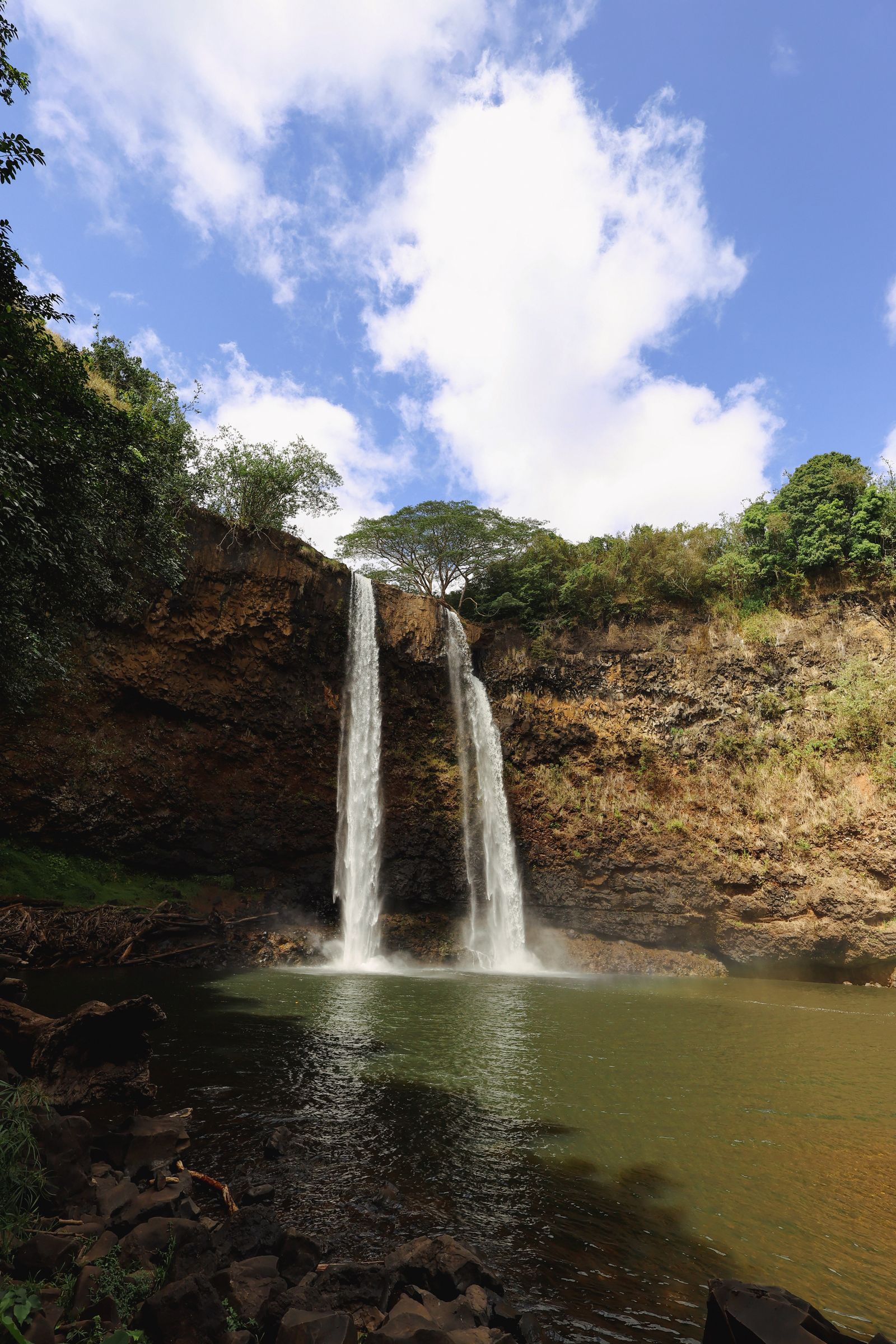
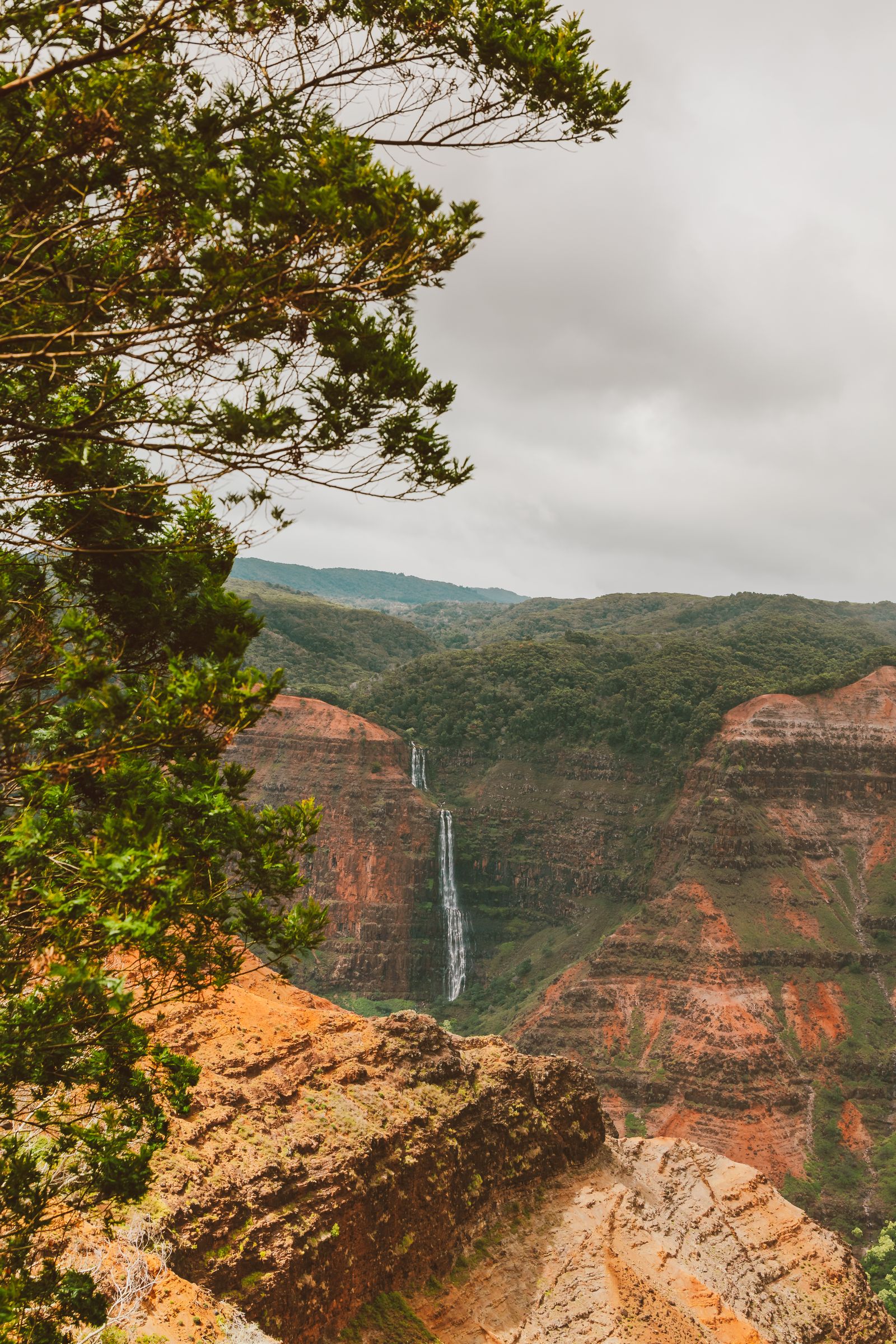
Answer: If Ho’opi’i access is unclear, choose a signed public viewpoint. Go Hawai’i describes Wailua Falls as roadside-accessible, while ʻŌpaekaʻa Falls has a clearly signed roadside lookout with picnic tables and restrooms. These alternatives are better for a mixed group, a short weather window, or anyone who should not be on a muddy informal route.
| Alternative | Why it works | Check before going |
|---|---|---|
| ʻŌpaekaʻa Falls Lookout | Signed roadside viewpoint, picnic tables, and restrooms | Current parking, weather, and state-park notices |
| Wailua Falls viewpoint | Roadside viewing without a muddy trail to the base | Road conditions, parking, and safe roadside behaviour |
| Ke Ala Hele Makālae | A more predictable east-coast walking option | Current route section, heat, shade, and water |
| Food-first Kapa’a day | Plant-based food, shops, and a flexible weather backup | Hours, reservations, and current menus |
ʻŌpaekaʻa Falls Lookout
A signed roadside viewpoint with picnic tables and restrooms, useful when you want a predictable waterfall stop without an informal stream route.
Wailua Falls viewpoint
A roadside viewing option that can work better for mixed mobility, short weather windows, or a group that should not descend a muddy social trail.
Do not substitute another informal waterfall trail just because a social-media post calls it “secret.” Legal access, land respect, and current conditions matter more than novelty. The UK countryside travel guide uses the same principle: choose a route that works for the whole day, not only the most photogenic stop.
What should you pack?
Answer: Pack for a muddy, wet, mosquito-prone route and a cancelled swim. Bring grippy shoes, rain protection, insect repellent, water, a sealed vegan meal, dry clothes, a waterproof phone pouch, and basic first aid. Leave valuables and unnecessary gear in the car only if the parking situation is secure and lawful.
- Closed-toe shoes with real grip; not smooth sandals.
- Light rain layer and a dry change of clothes.
- Insect repellent and sun protection.
- Water and enough vegan food for a delayed return.
- Waterproof phone case, offline map, and power bank.
- Blister care, antiseptic, personal medication, and a small emergency light.
- Reusable bag for every item you carry in and out.
Use the practical vegan packing guide for a complete trip list and the mixed-menu ordering guide for Kapa’a food stops. The seasonal packing list is useful for wetter or cooler shoulder-season days.
Is the Ho’opi’i Falls route accessible?
Answer: No. Reports of mud, roots, uneven stream-edge terrain, social trails, slippery descents, and uncertain maintenance mean this is not a wheelchair-accessible or reliably stroller-friendly attraction. It is also a poor choice for anyone who needs toilets, seating, a maintained surface, or a predictable emergency response.
For a more accessible waterfall experience, choose the signed ʻŌpaekaʻa Falls lookout or Wailua Falls viewpoint, while still checking current notices and roadside conditions.
What mistakes should visitors avoid?
Answer: The biggest mistakes are treating a map pin as permission, parking on Kapahi Road, swimming because other visitors do, crossing water after rain, and assuming old blog instructions remain current. A responsible visit includes a clear “no” decision when access or conditions are uncertain.
- Following an old trail post: access arrangements and resident guidance can change.
- Parking beside homes: narrow roads need emergency access and resident use.
- Searching for a way around a sign: that can become trespass.
- Jumping or swimming: freshwater contamination, rocks, current, and depth are not visible from a photo.
- Starting after heavy rain: streams can rise quickly and mud can hide unstable footing.
- Going without food or water: the route has no guaranteed facilities.
- Using a drone or loud speaker: disturb residents, wildlife, and the cultural landscape.
- Leaving toilet paper or food waste: pack out everything and use facilities before you leave town.
Frequently asked questions
Is Ho’opi’i Falls currently open?
Access is not simple or consistently presented as a managed public attraction. Verify current official and local guidance on your date. If signs or residents indicate closure, no trespassing, or no parking, leave.
Is Ho’opi’i Falls free?
There is no standard visitor ticket described for the route, but “free” does not mean every approach or parking practice is permitted. Costs, permissions, and restrictions can change.
Where is the Ho’opi’i Falls trailhead?
It is associated with Kapahi Road near Kapa’a, but do not treat a map pin as a guaranteed legal trailhead or parking instruction. Verify the current approach locally.
Can you park on Kapahi Road?
Do not assume so. Current reporting describes resident complaints about blocked driveways, traffic, and emergency access. Obey posted no-parking and residential-access signs.
Can you park at Kapahi Park?
Some trail listings recommend Kapahi Park, but local reporting questions whether it is appropriate overflow parking for the falls. Check current county signage and do not treat it as guaranteed falls parking.
How long is the hike?
Informal guides commonly describe about 2.5 miles round trip and 1–2 hours before viewing time, but mud, route-finding, water, and access changes can make it longer.
Is Ho’opi’i Falls safe for swimming?
Do not plan to swim. Hawai’i’s Department of Health advises avoiding freshwater streams and ponds because of leptospirosis risk, particularly with open cuts or exposure to eyes, nose, or mouth.
Can you jump from the falls?
No. Do not jump. Submerged rocks, variable depth, current, injury history, and freshwater-health risks make waterfall jumping an unsafe travel recommendation.
What should you do after rain?
Cancel if water is rising, muddy, fast, or carrying debris. Never cross a flooded stream. Check county and National Weather Service warnings before leaving.
Is Ho’opi’i Falls suitable for children?
Only if access is clearly open and the adults can manage close supervision on mud, roots, water edges, and uncertain terrain. A signed viewpoint is usually the better family choice.
Is there vegan food near Ho’opi’i Falls?
Yes, Kapa’a is the practical base. Check Vegetate808 and the current Kaua’i vegan food guide, then carry a sealed backup meal because hours and menus change.
What is the best alternative if access is unclear?
Choose ʻŌpaekaʻa Falls Lookout or Wailua Falls viewpoint after checking current notices. Both offer more predictable public viewing than an unmaintained or disputed route.
Final summary and key takeaways
Ho’opi’i Falls is a beautiful but complicated Kaua’i stop. The responsible version of this guide does not promise a secret waterfall, free roadside parking, or a safe swimming hole. It asks you to verify access, respect residents and kuleana land, avoid freshwater immersion, cancel after heavy rain, and choose a managed alternative when the situation is unclear.
- Access and land status are complicated; verify before travelling.
- Do not park on Kapahi Road or block homes, farms, or emergency access.
- Do not bypass signs, barriers, closures, or resident instructions.
- Do not swim or jump; Hawai’i DOH advises avoiding freshwater streams and ponds.
- Cancel for flash-flood risk, fast water, brown water, or unstable weather.
- Use Kapa’a for vegan food, water, and a weather backup.
- Choose ʻŌpaekaʻa Falls or Wailua Falls when you need a predictable public viewpoint.
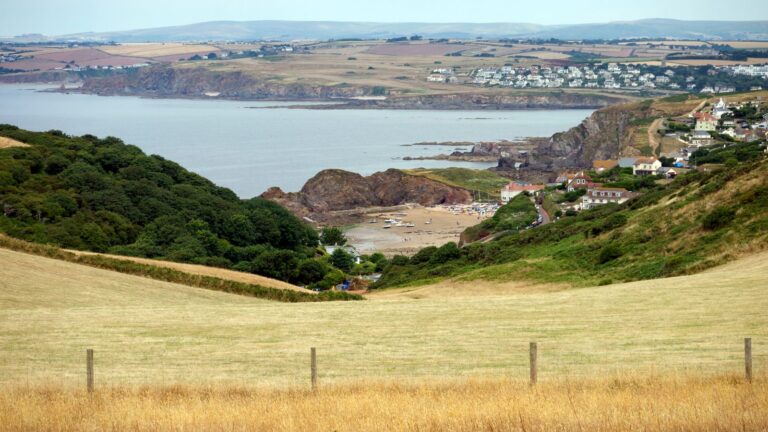
Use the vegan food guides hub to connect this stop to the rest of your trip, and use the hotel booking guide when choosing a Kapa’a base with a kitchen or reliable breakfast. For another coast-and-weather decision guide, compare the Hope Cove coastal guide.
Sources and Verification
Checked 25 October 2026. Ho’opi’i Falls access, parking, land management, weather, water conditions, food hours, and trail status can change. Recheck the exact date before travelling.
- Kaua’i Now: resident and access reporting for current parking conflict, unclear maintenance responsibility, state/leased land context, and rescue concerns.
- Hawai’i DLNR Division of State Parks: Kaua’i hiking updates for state-park notices and closures.
- National Weather Service Honolulu for Kaua’i forecasts, watches, warnings, and the current flood-safety link.
- Hawai’i Department of Health: Leptospirosis for freshwater exposure and prevention guidance.
- Hawai’i DLNR: stream-crossing safety for the warning never to cross a flooded stream.
- Go Hawai’i: ʻŌpaekaʻa Falls for the signed roadside lookout, picnic tables, and restrooms.
- Go Hawai’i: Wailua Falls for the roadside viewing alternative.
- Vegetate808 for current plant-based dining information in Kapa’a.
- Kaua’i County Sunshine Markets for current market locations and schedules.
Next step: check current Kaua’i notices and the access situation first. If anything is unclear, choose a signed public waterfall viewpoint instead of taking a risk with residents, land, water, or weather.
Checked 10 October 2026. Ho’opi’i Falls access, parking, land management, maintenance, community concerns, and rescue context verified against Kaua’i Now reporting and current trail guidance. Hawai’i DOH verified freshwater and leptospirosis prevention guidance. DLNR verified stream-crossing and Kaua’i state-park notice pages. Go Hawai’i verified ʻŌpaekaʻa Falls and Wailua Falls alternatives. Vegetate808 and Kaua’i County Sunshine Markets remain date-specific food references. Recheck signs, closures, parking, weather, water, menus, and hours before travel.